Table of Contents
ToggleA small beige bedroom isn’t a limitation, it’s an opportunity. Beige, with its warm neutral palette, creates a calming foundation that makes even tight quarters feel welcoming and intimate. The challenge isn’t the color or the square footage: it’s knowing how to layer, arrange, and accessorize thoughtfully so your space doesn’t feel boring or cramped. This guide walks through practical strategies for making your small beige bedroom feel intentional, comfortable, and genuinely stylish without requiring a major renovation or a contractor’s budget.
Key Takeaways
- Small beige bedroom ideas succeed when you choose the right shade of beige—warm honey tones or cool greige—by testing paint samples at different times of day before committing.
- Prioritize vertical storage with wall-mounted shelves, floating desks, and corner units to maximize floor space and avoid the cluttered feeling that small rooms often suffer from.
- Layer your lighting with soft ambient sources, bedside lamps, and accent lights using warm white bulbs (2700K) to enhance the calming qualities of beige without harsh, institutional overhead light.
- Add depth and personality through textiles, plants, and curated decor in a limited accent color palette rather than pure monochromatic beige, which can feel flat and uninviting.
- Use furniture with visible legs, position the bed against the longest wall to preserve pathways, and incorporate mirrors opposite windows to bounce natural light and make tight quarters feel more open.
- Implement smart under-bed storage, organized closet systems, and light-finished furniture pieces to keep clutter hidden and maintain the calm, intentional look that makes small spaces feel larger.
Choosing the Right Shade of Beige for Your Bedroom
Not all beiges are created equal. Some lean warm and golden (think honey or caramel), while others skew cool and greige (a beige-gray hybrid). The undertone matters because it sets the emotional tone for the entire room.
Warm beiges pair naturally with cream, ivory, and warm whites, and they feel approachable and cozy. Cool beiges or greiges work beautifully with cooler accents like soft blues, muted greens, or taupe. Before committing, grab paint samples from your local hardware store and tape them to the wall you’re considering. View them at different times of day, morning light, afternoon sun, and evening lamp light all change how a color reads.
Bedroom walls should feel restful, so avoid beiges with too much red or orange undertone, which can feel jarring at night. A soft, neutral beige with subtle warmth (like Sherwin-Williams “Accessible Beige” or Benjamin Moore “Hale Navy’s” warmer cousins) works for most small spaces. If you’re uncertain, greige is a modern, forgiving middle ground that photographs well and feels intentional rather than beige-by-default.
Remember: you can always add color through textiles, artwork, and decor. The wall is just the backdrop.
Furniture Arrangement Strategies for Small Spaces
In a small bedroom, every piece of furniture has to earn its place. Start by measuring your room and sketching a rough floor plan (even on graph paper, old-school works fine). Identify the bed as your anchor, it typically consumes the most visual weight, so positioning matters.
The classic layout places the bed against the longest wall, leaving pathways on either side if possible. This keeps the room from feeling blocked off. If your small bedroom has a window, avoid covering it with the bed: natural light is your ally in making tight spaces feel open. Floating the bed (placing it away from the wall) can work in smaller rooms if you have clearance on at least one side, it creates visual interest and can make the room feel less boxy.
Maximizing Floor Space With Smart Placement
Choose furnishings with visible legs rather than skirted frames: they create visual breathing room. A low-profile platform bed or a simple metal frame takes up less visual real estate than a heavy upholstered headboard. If you need a nightstand, one narrow table on the side where you sleep beats a matching pair that clutters both sides.
Wall-mounted shelves or a narrow floating desk replace the floor footprint of a traditional dresser or desk. Vertical storage is non-negotiable in small bedrooms. Corner spaces are often wasted, a narrow corner shelf unit, a ladder shelf, or wall hooks turn dead zones into functional storage. Avoid oversized furniture pieces: a queen bed is reasonable, but a king plus two dressers will strangle the space.
Lighting Solutions That Enhance Warmth and Openness
A single overhead fixture is the enemy of a small beige bedroom. Harsh central light washes out warm tones and makes tight rooms feel institutional. Instead, layer your lighting: one soft ambient source (ceiling fixture dimmed or replaced with a warm-toned option), a bedside table lamp for reading, and accent lighting like wall sconces or string lights for mood.
Warm white bulbs (2700K color temperature) pair perfectly with beige and create the relaxation you want in a bedroom. Avoid cool white (5000K+) which clashes with warm beiges and feels clinical. If you’re renting and can’t rewire, plug-in sconces on either side of the bed provide task lighting and visual interest without hardwiring.
A well-placed mirror opposite or adjacent to a window bounces natural light around the room, making it feel larger and brighter. Pair the mirror with a simple frame in white, light wood, or brushed metal to keep it from feeling decorative-heavy. Avoid oversized mirrors that dominate the space: an 18-24 inch mirror does the job in most small bedrooms.
Textiles and Layers for Depth and Comfort
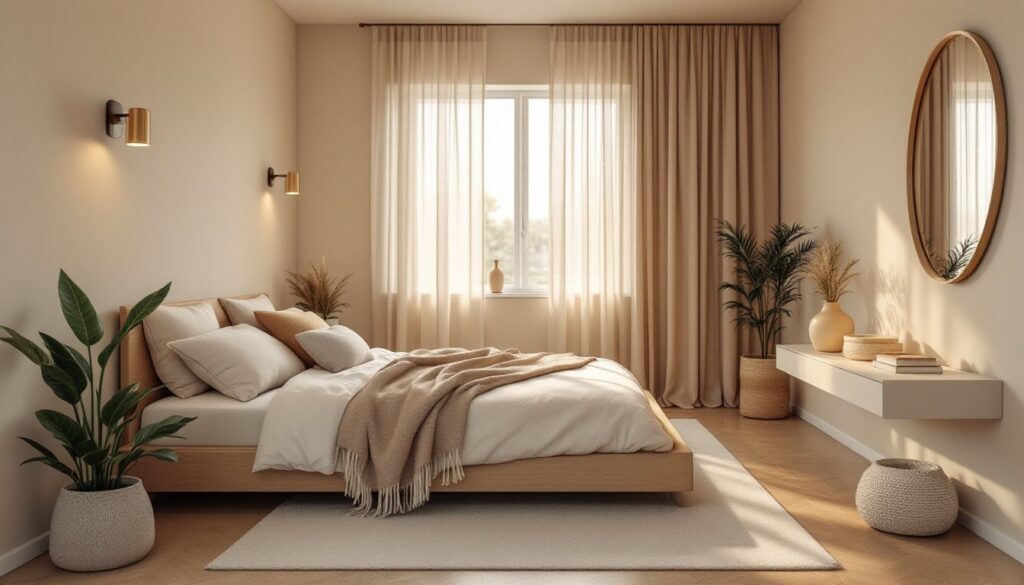
Textiles are where a small beige bedroom comes alive. A monochromatic or tonal approach (various shades of beige, cream, and taupe) keeps the eye from bouncing around and makes the space feel cohesive even if it’s compact. Layer a neutral duvet with throw pillows in different fabrics, a linen mix, a cotton sateen, a subtle textured weave, to add visual and tactile interest without color clutter.
A throw blanket draped over the foot of the bed or folded on a chair adds warmth and softness. A area rug (even a small 4×6 runner at the foot of the bed) defines the sleeping zone and softens the hard edges of a small room. Choose rugs in cream, light gray, or soft taupe that complement your walls without competing with them.
Curtains or drapes also matter. Floor-to-ceiling sheer panels make even a small window feel taller and more generous. If your room gets afternoon sun, lightweight linen or cotton blend shades provide softness without bulk. Heavy velvet or thermal-lined curtains consume visual space and can overwhelm a small room, save those for larger bedrooms.
Accent Colors and Decor to Break Up Neutrality
Pure monochromatic beige can feel flat and uninviting. Add subtle color through artwork, plants, and small decor pieces to give the room personality and depth. A gallery wall with a mix of botanical prints, photography, or abstract art in soft frames brings visual richness without overwhelming the space. Stick to a limited palette, maybe one accent color like soft sage green, dusty blue, or warm rust alongside your beige.
Living plants (or high-quality faux plants if light is limited) add organic texture and warmth. A simple potted plant on a shelf, a hanging fern, or a low-maintenance snake plant on a nightstand softens the room’s lines and adds life. Wood accents, a wooden frame, a simple shelf, or a natural fiber basket, echo natural warmth and pair beautifully with beige.
Small decor items should be purposeful. A table lamp with a warm ceramic base, a wooden jewelry box, or a collection of linen-bound books on a shelf feel curated rather than cluttered. The rule: every piece should either serve a function or spark genuine interest. Interior design inspiration from sources like interior design trends and room design concepts shows how even neutral spaces come alive with thoughtful layering.
Storage Solutions That Keep Clutter Hidden
A small bedroom feels smaller when clutter is visible. Smart storage is essential. Under-bed storage containers (fabric bins or low-profile plastic drawers) hide off-season clothing or extra bedding without consuming floor space. Closet organization with slim hangers, shelf dividers, and hanging organizers maximizes vertical real estate and keeps clothes visible and accessible.
Open shelving works in small spaces, but only if it’s organized. Baskets, boxes, or bins on shelves contain visual chaos and create a calm, intentional look. Floating shelves above the desk or dresser add storage without the footprint of a cabinet. A tall, narrow dresser or armoire provides more storage per square foot than a wide, low one.
Wall hooks, placed near the door or above a desk, create functional storage for bags, hats, or scarves without needing furniture. Avoid dark, heavy storage pieces: light wood finishes or white-painted cabinets feel open and airy in a small room. For a truly budget-conscious approach, bedroom decorating ideas on a budget offer DIY storage hacks and smart material choices that transform small spaces affordably.