Table of Contents
ToggleA blank concrete patio is like an unfinished room, it’s there, it’s functional, but it’s not doing anything for your backyard. Stained concrete transforms that gray slab into a design statement that works with nearly any aesthetic, from ultra-modern to rustic charm. Unlike paint, stain penetrates the concrete surface, creating a permanent color that won’t peel or chip. Whether you’re looking for rich earth tones, bold geometric patterns, or understated elegance, stained concrete patio ideas offer budget-friendly solutions that rival expensive pavers or tile. The best part? Many homeowners can handle the staining themselves with proper prep and the right approach.
Key Takeaways
- Stained concrete patio ideas offer a permanent, durable alternative to paint because stain penetrates the surface and won’t chip or peel, making it ideal for long-term outdoor design.
- Modern minimalist patios work best with neutral acid-based stains in soft grays or warm whites, paired with simple furniture to let the stained concrete become the visual focal point.
- Warm earth tones like terra cotta and burnt sienna create rustic patios with aged character, especially when applied in two-tone variations to mimic natural stone weathering.
- Geometric patterns such as diamonds, checkerboards, and herringbone designs can be stenciled onto concrete using painter’s tape and complementary color stains for a custom look without tile costs.
- Multi-color blending techniques require careful planning and slower-curing acid-based stains to create ombré transitions, and professional application is recommended for complex designs.
- Proper maintenance—including gentle cleaning, resealing every 2–3 years, and avoiding salt-based de-icers—preserves your stained patio’s color and durability for years with minimal upkeep.
Modern Minimalist Stained Concrete
Clean lines and neutral tones define modern minimalist patios. Think polished concrete in soft grays, warm whites, or pale beige, colors that feel intentional but uncluttered. Acid-based stains work best here because they create subtle, mottled variations that add depth without visual noise.
Start with a thoroughly cleaned and slightly etched surface. Acid stains react with the concrete’s lime and minerals, so surface prep determines color consistency. A single-tone stain in shades like Silver Grey or Desert Tan keeps the look clean. If you want texture without pattern, consider a light acid wash that enhances the concrete’s natural aggregate without obvious coloring.
Pair your neutral stained patio with simple outdoor furniture, think metal frames, low-slung wood benches, or minimalist planters. The patio itself becomes the backdrop. This approach works especially well for smaller spaces where visual simplicity makes the area feel larger. Seal everything with a clear polyurethane topcoat to protect against weathering and foot traffic.
Rustic Earth Tones and Warm Finishes
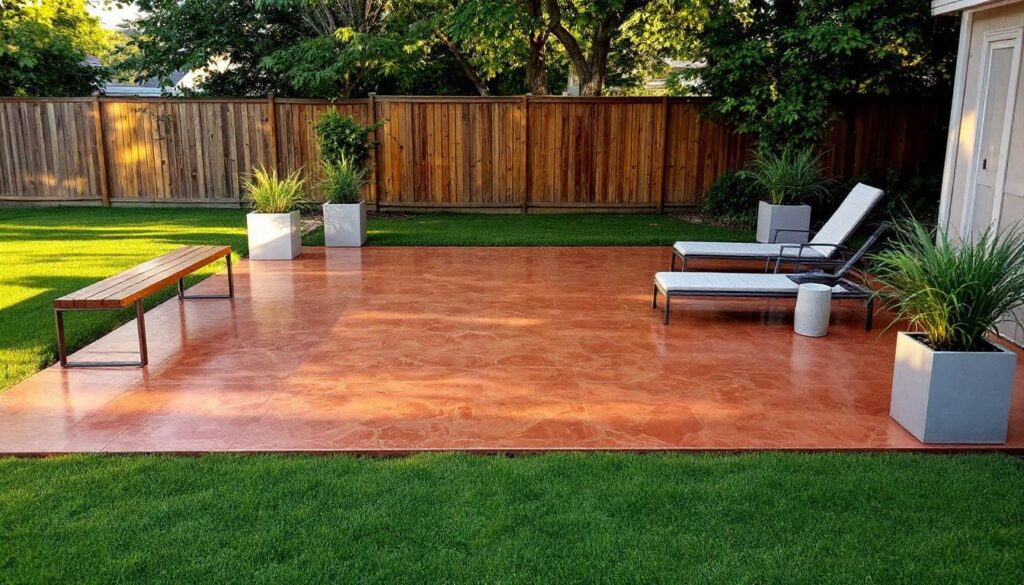
Warm, earthy stains bring coziness to outdoor spaces. Terra cotta reds, ochres, burnt siennas, and deep browns mimic natural clay and stone while remaining distinctly concrete. These colors feel organic and grounded, making patios perfect for entertaining.
Rustic finishes benefit from a slightly aged or weathered appearance. Reactive acid stains create natural-looking mottling that mimics how actual stone weathers over time. Apply stain in two tones, a primary warm color with a slightly darker accent wash, to simulate depth and hand-applied finish. This isn’t one uniform coat: embrace the variation.
For concrete that’s already several years old, weathering works in your favor. Acid stains adhere well to older surfaces because the concrete has naturally etched over time. Consider darker stains in corners or along edges to suggest shadow and depth, similar to how natural stone patinas in high-traffic areas. Finish with a matte or satin sealer rather than glossy to maintain that rustic authenticity. Rustic patios pair beautifully with 10 ways to dress up a drab concrete patio through complementary furnishings and landscaping.
Geometric Patterns and Stamped Designs
Geometric patterns add visual interest and a custom feel without the cost of tile or stone pavers. Common options include diamonds, checkerboards, herringbone layouts, and hexagonal repeats.
If your concrete is already stamped or textured from the original pour, work with those existing lines. Mark off your pattern with painter’s tape or chalk lines before staining. Use two to four complementary colors, perhaps a warm taupe base with charcoal accents or cream with sage green stripes. Apply stain in sections, allowing each color to dry before masking and applying the next.
For unstamped concrete, chalk grid it out first. A 2-foot or 3-foot grid is large enough to handle with brushes or rollers while small enough to create visual impact. Straight edges matter here, so use quality painter’s tape and press it firmly. Reactive stains dry quickly, usually 4 to 8 hours depending on humidity and temperature, so plan your color application in one or two working sessions.
Geometric designs pair well with modern and transitional homes. They’re also forgiving: subtle color variations in concrete naturally enhance the pattern rather than look like mistakes. Allow full cure time (typically 72 hours) before foot traffic, and seal between color applications to prevent bleed-through.
Multi-Color Blending Techniques
Blending multiple stain colors creates an ombré or sunset effect that feels sophisticated and artistic. Think deep blues transitioning to teals, warm golds fading into rust, or forest greens softening to cream.
This technique requires planning and patience. Sketch your transition zones before staining. Lightly mark where colors meet, you’re aiming for a gradient, not hard lines. Apply your first color (usually the darkest or most dominant) across most of the patio. While it’s still damp, begin spraying or brushing the second color into the border zone. The slight overlap creates a natural blend. Keep a spray bottle handy to keep the overlap zone moist: this gives you more working time.
Acid-based stains blend more gracefully than water-based options because they cure more slowly. Water-based stains set quickly, limiting your blending window. If blending sounds daunting, consider hiring a pro for this step, it requires a practiced hand.
Multi-color patios demand excellent sealing. The stain is permanent, but foot traffic, sun exposure, and weathering all fade color over time. A quality polyurethane or epoxy seal extends the vibrancy. Apply two coats, with sanding between for adhesion. Resources like Houzz showcase finished examples to inspire your color choices.
Staining vs. Painting: Which Is Right for Your Patio
The core difference: stain penetrates concrete: paint sits on top. Staining is permanent and more durable. Paint is easier to change but requires regular maintenance and eventually peels.
Stain advantages: Color doesn’t fade as quickly (it’s integrated into the concrete itself). Stain won’t chip or peel, so it’s lower maintenance long-term. It’s also less slippery when wet, important for patios. Acid-based stains create mottled, natural-looking finishes that suggest depth.
Paint advantages: Easier to DIY with minimal prep. Less expense upfront. Simple to change colors in a few years. Better for concrete that’s heavily damaged or stained, paint covers imperfections.
Stain disadvantages: Can’t lighten concrete with stain, only darken or add tone. Surface prep is critical: any dirt or efflorescence (white mineral deposits) interferes with adhesion. Reactive stains depend on concrete chemistry: results vary by concrete age and composition.
Paint disadvantages: Requires repainting every 2-3 years in high-traffic areas. Will chip, peel, or flake over time. More slippery in wet conditions unless you add grit. Can trap moisture if not properly sealed underneath.
For most DIYers, stain is the better long-term choice even though the higher preparation demands. Paint is faster but treats symptoms rather than creating a lasting finish. If your concrete has deep cracks, spalling, or significant staining, consult a concrete repair pro before committing to any finish. Professional guidance from resources like This Old House can help you assess whether your concrete is suitable for staining or if it needs repairs first.
Maintenance Tips to Preserve Your Stained Concrete
A properly stained and sealed patio lasts for years with minimal upkeep. Here’s how to protect your investment:
Cleaning: Sweep regularly to remove debris. Hose down every few weeks to prevent algae and moss growth (especially in shaded areas). For stubborn stains, use a pH-neutral concrete cleaner, never acidic or bleach-based cleaners, which can damage stain and sealer. Avoid power washing at high pressure: it erodes sealer. If power washing, keep the nozzle at least 12 inches away and use low pressure (under 1500 PSI).
Sealing schedule: Most penetrating sealers last 2-3 years before requiring reapplication. Water-based sealers typically require more frequent touch-ups than solvent-based. Plan to reseal every 2-3 years, or sooner if water stops beading on the surface.
De-icing: Avoid rock salt in winter: it degrades concrete and sealer. Use calcium chloride or magnesium chloride instead, or skip chemical de-icers and shovel snow early. Repeated freeze-thaw cycles can eventually cause surface spalling, but proper sealing delays this.
Repairs: Small cracks or chips don’t require restaining. Clean the area and apply concrete filler or epoxy repair compound. For large cracks or structural concerns, consult a concrete contractor before attempting a fix.
Stain longevity: Acid-based stains are chemically permanent once cured, but the sealer is what fades and requires renewal. Direct sunlight will gradually lighten any stain color, especially reds and blues. Strategic landscaping or patio umbrellas can minimize UV exposure in high-sun areas.
Conclusion
Stained concrete patios offer versatility, durability, and design flexibility that budget-conscious homeowners appreciate. Whether you choose minimalist grays, warm earthy tones, geometric patterns, or blended multi-color effects, the transformation from drab slab to polished outdoor room is dramatic. Success hinges on honest surface assessment, thorough prep work, and choosing the stain type, acid-based, water-based, or reactive, that fits your concrete’s condition and your design goals. With proper sealing and occasional maintenance, your stained patio will remain a handsome backdrop for gatherings, entertaining, and simply enjoying your backyard for years to come.