Table of Contents
ToggleA small kitchen doesn’t have to mean sacrificing a dedicated dining area. Whether you’re working with a galley layout, an apartment kitchen, or a compact home, an eat-in kitchen brings convenience, charm, and real functionality to your daily routine. The key is choosing furniture, layouts, and design elements that work with your space rather than against it. This guide walks you through practical solutions, from the right table styles to smart storage combinations, that let you squeeze a dining zone into even the tightest footprint. You’ll find ideas that are doable without a full renovation and within realistic budgets.
Key Takeaways
- Small eat in kitchen ideas maximize functionality by choosing round or square tables with pedestal bases, which require less visual space than traditional rectangles and allow 24 inches of clearance around seating.
- Drop-leaf and wall-mounted fold-down tables are space-saving solutions that shrink your footprint when not in use, making them ideal for galley layouts and compact apartments.
- Hybrid furniture pieces with built-in storage, such as benches with lift-tops and tables with drawers, eliminate clutter and serve dual purposes in tight kitchens without requiring additional square footage.
- Mirrors, light neutral wall colors, and glass-topped furniture create visual depth and make small eat-in kitchens feel larger without costly renovations.
- Budget-friendly DIY projects like painting walls, building simple benches, and installing pendant lighting can transform your eat-in kitchen for $40 to $300, delivering high-impact results over a weekend.
Choosing the Right Dining Table for Limited Space
The table is the anchor of any eat-in kitchen. Get this wrong, and your space feels cramped: get it right, and everything clicks. Start by measuring your kitchen carefully, not just the floor space, but account for door swings, appliance openings, and walkways. A rule of thumb: leave at least 24 inches of clearance around the table so people can push chairs back and move without bumping elbows.
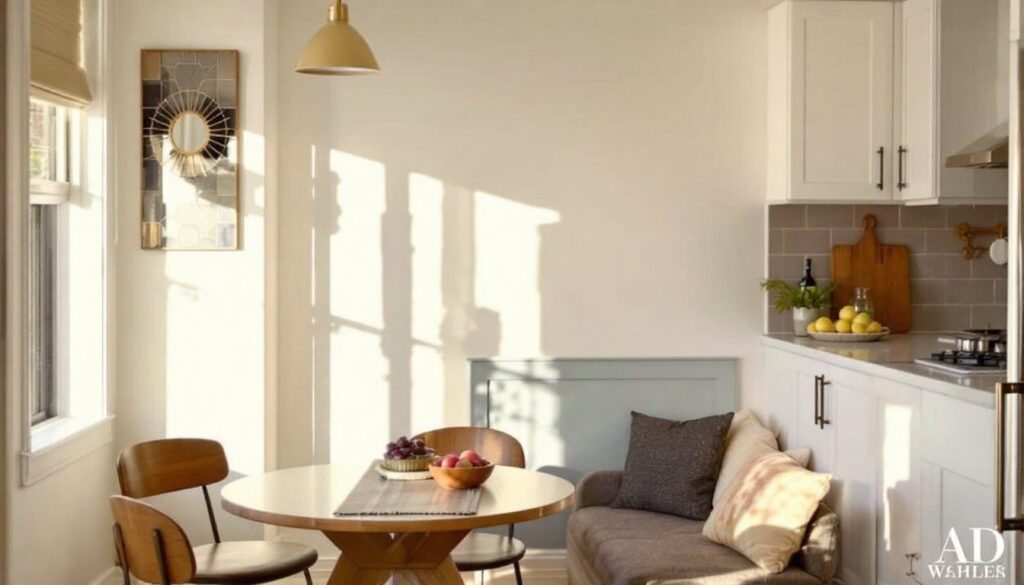
Round and square tables are typically more space-efficient than long rectangles. A 36-inch round table seats four comfortably and takes up less visual footprint than a narrow rectangular version. If you need seating flexibility, consider a pedestal base (no legs at corners) or a table with a narrow edge profile.
Space-Saving Table Styles That Work Best
Drop-leaf tables are a smart choice for small kitchens. One or both leaves fold down when you’re not entertaining, shrinking the footprint significantly. When you need extra seating, flip them up. The trade-off: they’re a bit fussy to operate and take up counter depth when folded.
Wall-mounted or fold-down tables attach to the wall and fold flat when not in use. These are excellent if your kitchen has spare wall space near the eat-in zone. They typically accommodate two to four people and cost less than traditional tables.
Expandable tables with hidden leaves give you flexibility without the wall attachment. Look for models with smooth-gliding mechanisms: cheap hardware tends to stick and frustrate. Depth is critical, keep the table 30 to 36 inches deep so diners don’t feel crowded.
Bench seating on one side saves space compared to chairs on all sides. Benches tuck cleanly against the wall or under the table and double as additional storage if you choose models with lift-tops or drawers. Kitchen counter decorating ideas work well alongside bench seating, creating a cohesive visual flow from counter to dining area.
Layout Solutions That Make Your Eat-In Kitchen Flow
Layout is about traffic patterns and how your body moves through the space. Before buying anything, sketch your kitchen from above and mark the work triangle (sink, stove, refrigerator). Your eat-in zone should live outside this triangle so cooking doesn’t interfere with dining.
For galley kitchens, position the table perpendicular to the counter run, using it as a visual break between cooking and eating zones. This creates a sense of separation without needing a wall or railing.
In L-shaped kitchens, the corner alcove or the end of one leg often works well for a small dining setup. An L provides natural boundaries and feels less cramped than placing a table in the center of an open kitchen.
Open floor plans benefit from a table that acts as a subtle boundary marker. Use the table’s scale and height to define the space without blocking sightlines. A lower-profile piece makes the area feel less “installed” and more integrated. Resources like The Kitchn offer photo galleries showing how successful small kitchen layouts balance cooking and dining in the same visual footprint.
Storage and Seating Combinations to Maximize Functionality
In a small kitchen, every piece of furniture should earn its square footage. Skip the standalone table-and-chair set and opt for hybrid pieces instead.
Tables with built-in storage underneath or inside drawers help you stash table linens, silverware, cooking gadgets, or seasonal items. Pedestal tables with a storage base work especially well in tight kitchens.
Storage benches on one side of the table provide seating and a place to tuck away pantry overflow, cookbooks, or small appliances you don’t use daily. Measure the bench height carefully, it should be roughly the same as your chair seats, typically 16 to 18 inches high, so sitters feel balanced at the table.
Corner banquettes with storage underneath are a traditional restaurant-style solution that works beautifully in small kitchens. You can build one yourself with 2×12 lumber, foam padding, upholstery fabric, and a hinged lid to access storage, or buy a prefab modular unit. Banquettes are permanent, so measure twice and commit to placement.
Nesting or stackable stools store compactly under or beside the table when not in use. They’re ideal if your household size varies, pull out extra seating only when you have guests. Ensure they’re sturdy (rated for at least 250 pounds per seat) and have non-slip feet to prevent sliding on kitchen tile or wood.
When choosing storage pieces, prioritize pieces that hide clutter. Open shelving in a small eat-in area makes the space feel busier: closed storage and opaque sides create calm, even if you’re just out of view.
Design Elements That Make Small Eat-In Kitchens Feel Larger
Even in tight quarters, smart design choices can make the space feel open and inviting. The goal is visual expansion without renovating walls.
Mirrors on a wall opposite a window or light source bounce light around and create an illusion of depth. A decorative mirror or a series of smaller framed mirrors adds personality while amplifying available light.
Light, neutral wall colors, soft whites, warm beiges, pale grays, expand the sense of space. If you want color, use it on an accent wall (the one behind the table works well) and keep other walls neutral. A fresh coat of primer and paint is a weekend DIY project: one gallon covers roughly 350 square feet, and most small kitchens need just one to two gallons.
Glass or transparent furniture reduces visual weight. A glass-topped table or clear acrylic chairs don’t block sightlines the way solid wood or upholstered pieces do. They cost a bit more upfront but pay dividends in how spacious the area feels.
Lighting and Color Choices That Enhance the Space
Overhead pendants above the table should be 30 to 36 inches above the table surface, low enough to feel intimate, high enough not to obstruct conversation. Choose pendants with open sides or translucent shades so light spreads into the room rather than pooling directly below.
Ambient lighting on dimmer switches lets you adjust mood. A small under-cabinet light strip or a narrow strip light on a soffit adds brightness without taking up table space. Avoid harsh fluorescents: they make small spaces feel institutional and tire your eyes during meals.
Color psychology matters in tight spaces. Whites and creams feel airy: warm grays provide sophistication without coldness. If you use darker colors for the table or banquette, balance them with light walls and bright textiles, pillows, a table runner, napkins. Small eat-in kitchen photos on Houzz show how color blocking (light walls + darker furniture) creates visual interest while keeping the space from feeling cramped.
Budget-Friendly DIY Projects to Transform Your Eat-In Kitchen
Not every improvement requires hiring help or spending a fortune. Here are realistic DIY projects that yield visible results in a small eat-in kitchen.
Paint the walls yourself. Prep surfaces (fill holes, sand, patch), apply primer, and roll on two coats of finish paint. Budget about $40 to $80 for paint and supplies, and plan for a weekend. This is the highest-impact, lowest-cost refresh you can do.
Build a simple bench from 2×12 and 2×4 lumber, a sheet of plywood, foam padding (2 to 3 inches thick), and upholstery fabric. Cut the wood to length, assemble with pocket holes or simple butt joints, mount the frame to wall studs (use 3-inch wood screws), add padding and fabric, and add a hinged top for storage. Total cost: $150 to $300, depending on wood grade and fabric. You’ll need basic tools: drill, circular saw (or miter saw for cleaner cuts), clamps, and a stapler.
Install open shelving above or beside the table for light, frequently used items. Use French cleats (two interlocking strips of wood) mounted to studs, then mount shelves to the cleats. This method is adjustable and strong. Keep shelves shallow, 8 to 10 inches deep, so small items don’t disappear into shadows.
Refinish an existing table with new stain or paint. Sand the surface lightly with 150-grit sandpaper, fill any dents with wood filler, apply primer if painting, then finish with two coats of polyurethane or water-based topcoat. This protects your work and handles spills better than paint alone.
Add pendant lights over the table if you’re comfortable running electrical wire. This is a moderate DIY task if you follow local electrical codes (varies by jurisdiction) or hire an electrician for the hardwire, then install the fixtures yourself. Hardwired lights look cleaner than plug-in versions and don’t clutter counter outlets. Alternatively, use design-forward small kitchen solutions as inspiration, sometimes a well-placed lamp or upgraded fixtures from a big-box store make all the difference without rewiring.
Replace cabinet hardware if your table sits near cabinetry. New knobs and pulls are inexpensive (often under $50 for a full kitchen) and instantly refresh the space. This is a 30-minute project: unscrew old hardware, fill screw holes if they don’t line up, drill new holes if needed (measure carefully), and screw in new hardware.
Safety and prep notes: For any paint or stain work, ventilate well and wear a respirator if sanding indoors. For woodworking, wear safety glasses and hearing protection when using power tools. For electrical work, turn off breakers at the panel and test with a multimeter before touching wires. If you’re unsure about structural work or electrical installations, hire a licensed professional, especially for tasks affecting load-bearing walls or code-critical systems.