Table of Contents
ToggleA small cabin kitchen doesn’t have to feel cramped or outdated. Whether you’re renovating a rustic retreat or building from scratch, smart design choices can transform a tight galley kitchen into a functional, inviting space that works as hard as you do. The key is maximizing every square foot without sacrificing style or usability. This guide walks you through seven proven small cabin kitchen ideas that balance practicality with visual appeal, so you can cook, gather, and live comfortably in your space.
Key Takeaways
- Open shelving creates visual lightness in a small cabin kitchen while keeping everyday items accessible, though it requires regular organization and dusting to avoid a cluttered appearance.
- Multi-functional and compact appliances, such as 24-inch refrigerators and induction cooktops, maximize limited square footage without sacrificing cooking capability.
- Vertical storage solutions like wall-mounted racks, pegboards, and magnetic strips free up counter and floor space while keeping frequently used items within easy reach.
- Warm wood and natural materials such as honey pine, cedar, and butcher block countertops ground a small cabin kitchen and create an authentic, inviting atmosphere.
- Layered, strategic lighting with recessed fixtures, task lights, and accent lighting makes a small cabin kitchen feel larger and more functional than harsh overhead lighting alone.
- Optimizing the work triangle between sink, stove, and refrigerator with at least 4–9 feet between each element ensures efficient workflow in a compact galley or L-shaped layout.
Embrace Open Shelving for Visual Lightness
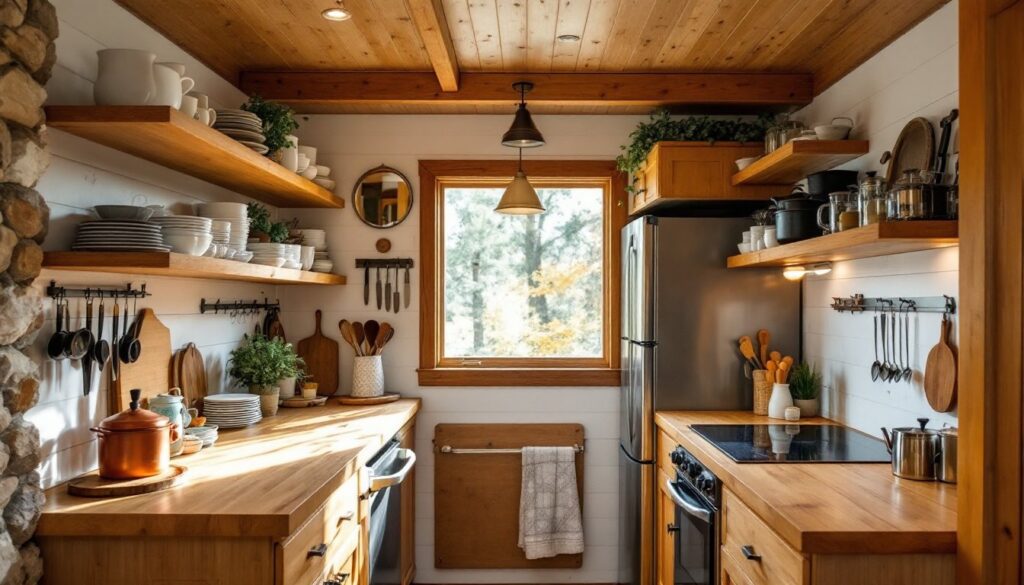
Open shelving replaces closed cabinetry with floating shelves or bracket-mounted units, creating an airy feel in a compact kitchen. Instead of heavy upper cabinets that close off the space visually, open shelves let light pass through and make the room feel larger. They’re also practical for a cabin kitchen where you want your best dishware, glass cloches, and pantry staples visible and accessible.
When installing open shelving, use recessed brackets or invisible mounting hardware to keep the look clean. For cabins with rustic charm, galvanized steel or black iron brackets pair well with wood or metal shelves. Mount shelves 32 inches from the countertop (standard cabinet-top height) or adjust based on your items and reach. Use open shelving for everyday dishes, glasses, and cookbooks, reserve closed storage below for bulk dry goods, cleaning supplies, and items you don’t use daily.
The trade-off: open shelves require organization discipline. Dust settles, so wipe items monthly. Keep the shelves styled, not cluttered. If your cabin kitchen lacks counter space, open shelving can work against you by taking up visual real estate. Consider a hybrid approach: open shelves on one wall, closed cabinetry on another.
Choose Multi-Functional Appliances and Compact Fixtures
Standard full-size appliances waste precious square footage in a small cabin kitchen. Instead, invest in compact or multi-function units that earn their counter or under-sink space. A 24-inch refrigerator (vs. a standard 30-inch) fits snugly in tight layouts. A convection microwave oven eliminates the need for a separate convection oven, saving cabinet space. Induction cooktops or portable induction burners (around 12 inches wide) replace bulky electric or gas ranges if you don’t cook elaborate meals daily.
For dishwashing, a compact 18-inch dishwasher or even a countertop unit handles daily loads in smaller households. A foldable or removable cutting board that slides between the sink and stove eliminates permanent counter clutter. Wall-mounted faucet with a pull-down sprayer gives you more counter clearance than a traditional fixed spout.
When selecting appliances, measure your actual space first. Nominal vs. actual dimensions matter: a 24-inch refrigerator is typically 23.5 inches wide. Check door swing, does it open into walkways or block cabinet access? Some compact appliances cost more per cubic foot than full-size models, but the space savings and multi-function design justify the investment in a cabin kitchen where every inch counts.
Use Vertical Storage Solutions
Vertical space is free real estate in a small kitchen. Walls, corners, and door backs can hold pots, pans, utensils, and pantry items without eating into limited counter or floor space. The goal is keeping frequently used items within arm’s reach while making the kitchen feel organized, not crammed.
Wall-Mounted Racks and Pegboards
A wall-mounted pot rack above the stove or a clear counter area holds cast iron, stainless steel pots, and lids where you can see and grab them. Install it 18 inches above the cooking surface to avoid heat damage and maintain safe clearance. A pegboard wall works well for cabin aesthetics, paint it a complementary color, mount 1/4-inch pegs, and hang ladles, whisks, measuring spoons, and small towels. Pegboards are easy to reconfigure as your needs change.
Magnetic strips on a stainless steel tile or directly on the backsplash hold knives, scissors, and metal utensils. Install at eye level for safety and access. Wall-mounted spice racks or a shallow cabinet (6-8 inches deep) keeps seasonings off the counter. Corner tension rods under the sink hold spray bottles and cleaning cloths vertically.
For pantry items, pull-out baskets or sliding drawer organizers in lower cabinets maximize depth. If you have a wall above a counter with no upper cabinets, add floating shelves or a narrow cabinet unit for dry goods. The key is layering storage types, racks, pegboards, shelves, and drawer dividers, so nothing blocks your workflow. Ensure all wall-mounted items are securely fastened to studs or use heavy-duty toggle bolts rated for your items’ weight.
Incorporate Warm Wood and Natural Materials
Cabins thrive on authenticity. Warm wood, stone, and natural finishes ground a small kitchen and make it feel like part of the landscape rather than a cramped utility closet. Exposed wood ceiling joists or rough-hewn beams add character: if your cabin already has them, don’t hide them with dropped ceilings.
For cabinetry, solid wood or wood-veneer fronts in warm tones, think honey pine, cedar, or walnut, age beautifully and hide fingerprints better than high-gloss finishes. Avoid cookie-cutter white lacquer unless it matches your cabin’s design language. A natural wood countertop (like reclaimed barn wood or butcher block) is warm and forgiving: it does require annual oiling and shows water stains, but that patina is part of cabin charm. Alternatively, honed granite or soapstone offers durability with a softer, less glossy look than polished stone.
Backsplash materials matter too. Subway tile, shiplap, or stacked stone all suit cabin aesthetics. Tile is easier to clean: shiplap adds rustic texture but can trap dust. A concrete backsplash sealed and scored to mimic stone gives an industrial-rustic vibe. Stone, wood, and earth tones in a small space create visual warmth and make the kitchen feel like a destination, not a tight squeeze. The kitchen counter decorating ideas that pair natural materials with minimal clutter reinforce this effect.
Install Strategic Lighting to Enhance Space
Lighting is the fastest way to make a small kitchen feel larger and more functional. Soft, layered light prevents shadows and opens up tight corners: harsh single overhead lighting makes a small space feel dungeon-like.
Start with ambient lighting: recessed lights or a low-profile flush-mount fixture flush to the ceiling (not a hanging pendant that crowds headroom). Space recessed lights 4-6 feet apart for even coverage. Add task lighting above the sink and stove, under-cabinet lights or track lights over work zones eliminate shadows when prepping food. Install these lights 18-24 inches above the countertop for glare-free illumination.
Accent lighting adds style and depth. A floating shelf with integrated LED strips above open shelving softly highlights dishware and creates visual interest. Warm white LEDs (around 2700K color temperature) feel cozy: cooler bulbs (4000K+) suit modern cabins. Dimmers on all circuits let you shift from bright task mode to warm cabin mood.
Mirrors opposite a window or light source bounce light and amplify the sense of space. A mirrored backsplash or a large framed mirror on one wall works, though mirrors require more cleaning. If windows are limited, don’t skimp on fixtures, three or four light sources beat one bright overhead every time. For safety, ensure all electrical work meets local National Electrical Code (NEC) standards: hire a licensed electrician if you’re uncertain.
Optimize Layout for Efficiency
Even the smartest storage won’t help if the kitchen’s work triangle, the path between sink, stove, and refrigerator, is broken. A small cabin kitchen demands ruthless layout discipline.
Measure your sink, stove, and fridge locations. Ideally, they form a triangle with legs of 4–9 feet each. In a galley layout (appliances on opposing walls), this is easier to achieve. In an L-shaped cabin kitchen, position the sink at the corner if possible: it’s the hub of most tasks. Ensure at least 24 inches of counter space on either side of the stove for prep and setting down hot items. The sink should have 18-24 inches of clear counter on each side.
If you’re relocating plumbing or electrical, factor in permit costs and lead times. Rerouting water and gas lines in a cabin can be expensive if walls aren’t already rough-framed for utilities. Work with a plumber to confirm feasibility before committing to a layout.
Keep the main walkway clear, no tall shelves or open cabinet doors blocking foot traffic between the kitchen and living space. Overhang a compact island or cart (24-30 inches deep) if you have the floor space: it adds prep surface and storage without major renovation. Ensure islands don’t block entry or the refrigerator door swing.
Resources like The Kitchn and Houzz’s small cabin kitchen collection showcase working layouts in tight spaces. Study how others have solved similar footprints, then adapt to your cabin’s quirks.