Table of Contents
ToggleTrim color is one of the most underrated decisions in home improvement. While most homeowners focus on wall paint and flooring, the color of baseboards, crown molding, and door casings quietly shapes the entire character of a room. The right trim color can make walls pop, draw attention to architectural details, or create a sophisticated, cohesive look throughout your home. Whether you’re refreshing a single room or tackling a whole-house repaint, choosing the right trim color requires more than just reaching for white primer. This guide walks through eight practical trim color ideas that work in 2026, from timeless classics to bold modern statements.
Key Takeaways
- Trim color ideas can completely transform a room’s character—dark trim creates graphic contrast and architectural definition, while light trim softens spaces and prevents a heavy feel.
- White and cream trim remain timeless classics that work across any wall color, but consider light gray-white hybrids if you have young kids or pets, as white shows dust and handprints more easily.
- Dark trim colors like charcoal, navy, or forest green demand good natural lighting and at least three coats of quality paint, making them a more time-intensive investment than lighter options.
- Greige trim offers a modern, forgiving middle ground by blending gray and beige tones—ideal for open-concept homes where trim needs to transition smoothly across multiple rooms and wall colors.
- Always test trim color ideas by painting 2-3 foot sections on your actual baseboards and observing them throughout the day and evening, as lighting dramatically affects how colors appear in your specific space.
- Accent trim colors on select moldings or baseboards add personality without overwhelming—stick to one bold color per room paired with neutral surrounding elements to avoid visual chaos.
Why Trim Color Matters More Than You Think
Trim serves both a functional and visual purpose in any room. Baseboards protect drywall from kicks and scuffs, while crown molding creates a polished transition between walls and ceiling. But beyond protection, trim frames your space and draws the eye where you want it to go.
The color of trim can make or break the impact of your wall paint. Dark trim against light walls creates graphic contrast and architectural definition, think a cottage with black painted baseboards and white walls. Light trim on darker walls softens the space and prevents a heavy feel. Matching your trim color to your walls creates a subtle, flowing aesthetic that makes rooms feel larger and more unified.
Trim color also affects perceived proportions. Lighter trim visually pushes walls back: darker trim anchors a room and adds weight. This matters especially in smaller spaces or rooms with low ceilings. When you understand these principles, you’re not just picking a color, you’re making a strategic design decision that affects how people experience your home.
Classic White and Cream Trim
White and cream trim remain popular for good reason: they’re forgiving, versatile, and feel clean. Bright white (like Benjamin Moore’s Chantilly Lace or Sherwin-Williams Pure White) works best in spaces with plenty of natural light and works across any wall color. Cream and off-white options, such as Ivory, Linen White, or Swiss Coffee, offer warmth without feeling sterile.
When painting white or cream trim, use high-quality trim paint specifically formulated for doors, baseboards, and molding. Semi-gloss or satin finishes (around 40–50% gloss) are standard because they’re more durable and easier to clean than flat paint. Expect to apply two coats after proper prep and priming.
One overlooked detail: white trim shows every dust particle and handprint. If you have young kids or pets, consider a lighter gray-white hybrid instead. These neutrals are also easier to maintain long-term while keeping that classic, timeless look that trim details enhance interior spaces with drama and definition across modern and traditional homes.
Bold and Dark Trim Colors
Dark trim, charcoal, navy, black, or deep forest green, commands attention and makes a statement. Sherwin-Williams Urbane Bronze, Benjamin Moore Hale Navy, or Cavern Clay create sophisticated, moody backdrops that make light-colored walls feel elevated and intentional.
Dark trim works best in rooms with good natural light to prevent the space from feeling cave-like. Bedrooms, bathrooms, and dining rooms often pull off dark trim beautifully. Pair dark trim with pale or mid-tone walls (soft whites, warm grays, or muted pastels) to maintain balance.
Before committing to dark trim, test your chosen color by painting a 2-foot section on your actual baseboard or door casing and observing it at different times of day. Lighting dramatically shifts how dark colors appear, what looks stunning at noon may feel heavy at dusk. Also plan on applying at least three coats of quality trim paint on dark colors, as coverage is notoriously thin. This is a more time-intensive project than white, so account for extra labor and paint costs.
Soft Neutral and Greige Options
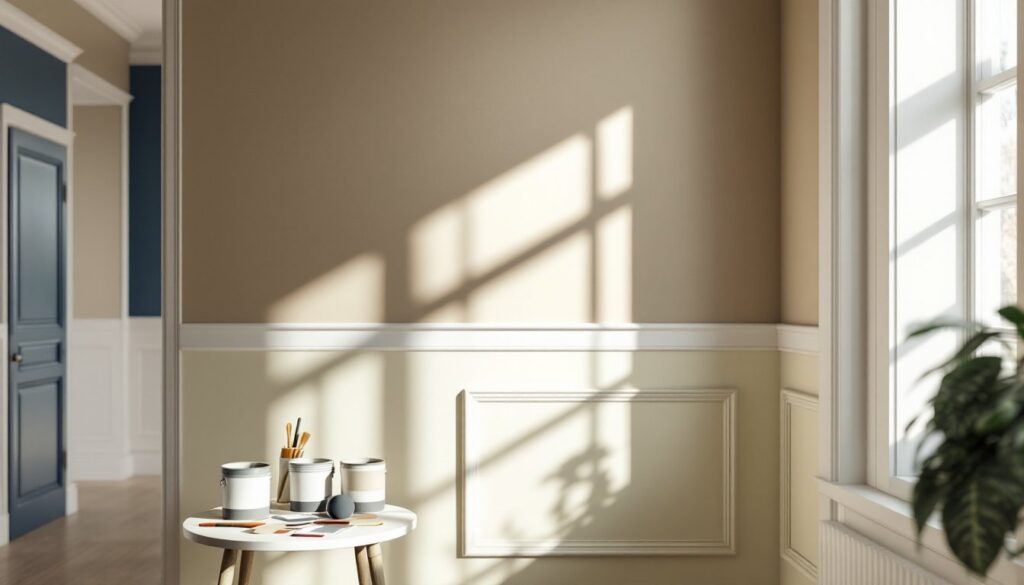
Greige, a blend of gray and beige, bridges warm and cool tones, making it ideal for homeowners who want trim that complements multiple wall colors. Sherwin-Williams Accessible Beige, Benjamin Moore Revere Pewter, or Wickham Gray are popular greige trim options that feel modern without being trendy.
Greige trim works especially well in open-concept homes where trim needs to transition smoothly across multiple rooms and wall colors. It softens dark walls without the starkness of white, and it grounds light walls without appearing dingy. Greige is also forgiving: variations in lighting don’t cause dramatic shifts in appearance the way pure white or pure gray can.
Soft neutrals like greige typically require two coats of quality trim paint. They hide imperfections better than bright white, so prep work (sanding, filling nail holes, caulking) can be slightly less perfectionist. Many DIYers find greige easier to work with than stark whites or bold colors, making it a smart middle-ground choice for first-time trim projects.
Accent Trim Colors for Modern Spaces
Modern design often breaks the “all trim matches” rule by using accent trim colors on select moldings, baseboards, or door casings. A navy blue baseboard against gray walls, or a sage green crown molding in a neutral kitchen, adds personality without overwhelming the space.
Accent trim works when you intentionally highlight architectural features. Paint only your crown molding, or only your baseboards, in a contrasting color while keeping door casings neutral. This draws attention to details you want to emphasize and adds visual interest without requiring a full commitment to a bold color throughout the home.
Popular accent trim colors include muted jewel tones (emerald, sapphire, deep teal), warm terracotta, and soft sage. Budget-friendly home makeovers show that accent colors create impact without the cost of a full color scheme overhaul. When using accent trim, stick with one bold color per room and keep surrounding elements neutral to avoid visual chaos.
How to Choose the Right Trim Color for Your Home
Start by gathering inspiration. Browse interior design resources and paint palettes to see how other homes use trim color. Look at homes with similar architectural styles, lighting, and wall colors to yours. Pin photos that appeal to you, then identify the common threads, are they mostly light, dark, or neutral trim?
Next, consider your wall color and overall palette. Light walls typically look best with white, cream, or light gray trim. Dark walls benefit from crisp white, light gray, or warm greige to avoid feeling oppressive. Mid-tone walls are more flexible, they can handle white, neutral grays, or even soft accent colors.
Always test colors before committing. Buy sample pints of your top two or three trim colors and paint 2-3 foot sections on your actual baseboards, door casings, or crown molding. Observe them throughout the day and evening under your home’s natural and artificial light. What looks good at the paint store may look different in your specific space. This small upfront effort prevents expensive repainting mistakes.
Finally, be honest about maintenance. White shows dust: dark shows fingerprints. Greige and soft neutrals hide imperfections better. Factor maintenance into your choice, especially in high-traffic areas like hallways and kitchens where baseboards take a beating from feet, furniture, and daily wear.
Conclusion
Trim color is a powerful, often overlooked tool in home design. Whether you choose classic white, bold charcoal, soft greige, or an unexpected accent shade, the right trim elevates your space’s character and ties your entire color scheme together. Test your choices in your actual light, invest in quality trim paint, and prepare surfaces thoroughly, these steps ensure professional results that last. Your trim deserves the same thoughtful consideration as your walls and flooring.