Table of Contents
ToggleA bedroom vanity isn’t just a place to apply makeup or brush your hair, it’s a personal retreat within your retreat. Whether you’re working with a sprawling master suite or a cozy guest room, the right vanity setup can elevate your entire bedroom’s functionality and aesthetic. This guide walks you through selecting, building, and styling vanity ideas for bedroom spaces that match your style, budget, and available square footage. You’ll learn how to choose the perfect style, maximize tight spaces, DIY on a shoestring, and keep everything organized so your vanity actually works for you.
Key Takeaways
- Vanity ideas for bedroom should align with your grooming needs and available space—traditional styles offer storage while floating wall-mounted vanities are ideal for compact rooms.
- Space-saving solutions like corner vanities and wall-mounted drop-down designs maximize small bedrooms without sacrificing functionality or style.
- Budget-friendly bedroom vanity setups can cost under $250 using IKEA components or DIY options like repurposed dressers and thrift-store furniture paired with a fresh coat of paint.
- Proper lighting with daylight-spectrum bulbs (4000–5000K) and sconces positioned at eye level eliminates makeup shadows and ensures accurate color application.
- Strategic organization using drawer dividers, clear bins, and rolling carts keeps your vanity functional and clutter-free while maintaining visual appeal.
Choosing the Right Vanity Style for Your Bedroom
Your vanity’s style should complement your bedroom’s existing design while reflecting how you’ll actually use the space. Start by asking yourself a few practical questions: Do you need counter space for daily grooming, or will you mostly get ready at a bathroom sink? Are you storing jewelry, perfume, and skincare, or just a hairbrush and lipstick? These answers determine whether you need a full dresser-style vanity or a slim desk-mounted setup.
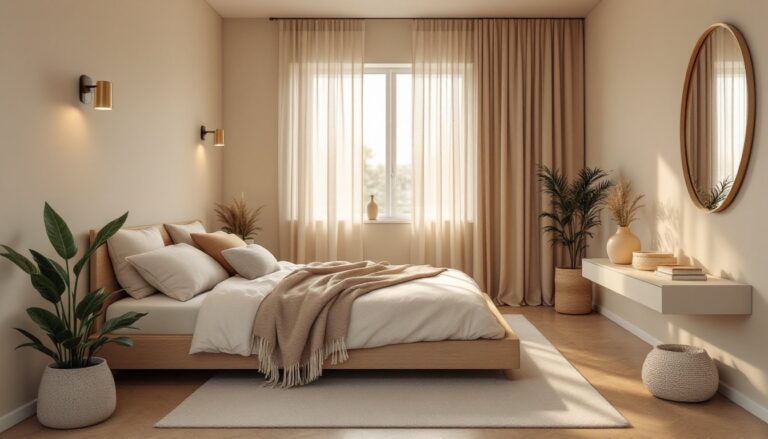
Traditional vanities pair a solid wood or furniture-style base with a mounted mirror and often include a small stool or bench. These work beautifully in classic or transitional bedrooms and offer genuine storage. Modern minimalist vanities feature clean lines, often with an open frame design and wall-mounted mirrors. They’re great for small spaces because they feel less bulky. Floating wall-mounted vanities save floor space entirely, just a countertop, legs, or brackets mounted directly to the wall, paired with a mirror above. They’re ideal for compact bedrooms.
Makeup-specific vanities are often narrower (24–30 inches wide) with a single mirror, while grooming vanities tend toward 36–48 inches to accommodate two people or extra counter space. Consider your room’s color palette and materials: white or light wood visually expands small rooms, while darker stains anchor larger spaces. Think about traffic flow too, don’t block windows, doorways, or closets with a large piece. Modern design inspiration from sources like Domino shows how vanity placement can anchor an entire bedroom layout without overwhelming it.
Space-Saving Vanity Solutions for Smaller Bedrooms
Small bedrooms demand smart vanity solutions that don’t eat up precious floor space. A floating wall vanity is the gold standard here, it mounts directly to wall studs (use a stud finder to locate them: most studs sit 16 inches on center) and doesn’t eat floor space. Pair it with a narrow mirror (18–24 inches wide) and you’ve got a functional setup that feels almost invisible.
Corner vanities make clever use of dead space, especially in bedrooms with angled ceilings or odd wall layouts. A compact L-shaped desk or corner unit with a small mirror fits snugly and doubles as a work surface if needed. Over-the-desk vanities work if your bedroom already has a dresser or desk, simply mount a mirror above and add task lighting. This approach saves money and space by repurposing existing furniture.
For the most minimal footprint, consider a wall-mounted drop-down vanity that folds away when not in use (search for “folding wall vanity” online for examples). These work best in bedrooms where grooming is occasional rather than daily. You can also use a narrow console table (30–36 inches wide, 12–16 inches deep) against a wall with a standing mirror leaning against the wall above. These look less furniture-heavy than traditional vanities and cost significantly less. Interior design platforms like MyDomaine frequently feature apartment and small-room solutions that show how vertical wall space replaces horizontal footprint.
Budget-Friendly Vanity Setups and DIY Options
You don’t need a $1,500 vanity to create a functional, attractive setup. IKEA and similar retailers sell basic vanity bases and tops for $150–$400. A simple LINNMON or similar tabletop (48 inches wide, about $50–$80) mounted on two LERBERG trestles ($30 each) or wall brackets creates a modern floating vanity for under $150. Add a basic mirror, and you’re around $250 total.
For true DIYers, build a vanity from plywood or reclaimed wood. A basic platform uses two 2×10 or 2×12 boards (actual dimensions: 1.5 × 9.25 or 1.5 × 11.25 inches) cut to length and mounted to wall studs with lag bolts. Top it with a finished piece of hardwood or laminate countertop (you can buy remnants cheaply from home improvement stores). This approach costs $100–$300 depending on material choices and takes a weekend if you have basic tools.
Upcycling furniture is another smart move. An old dresser becomes a vanity when you cut an opening for your legs and mount a mirror on top. A small desk, nightstand, or even a repurposed buffet table works. Thrift stores often have solid wood pieces for $30–$80. Paint it to match your bedroom (use primer first, then 2 coats of quality furniture paint), add hardware if needed, and you’ve got a one-of-a-kind vanity that costs a fraction of new retail. Bedroom Decorating Ideas on a Budget often highlight creative repurposing like this.
Organizing and Styling Your Bedroom Vanity
A pretty vanity loses its appeal when you can’t find your foundation. Before you decorate, organize ruthlessly. Keep daily-use items within arm’s reach, makeup, deodorant, skincare, and move seasonal or occasional items to drawers or cabinets below. Use drawer dividers (wood, plastic, or fabric bins) to section off spaces by category: brushes here, lipsticks there, skincare below. This prevents the “avalanche when you open the drawer” problem.
Styling comes next. Start with a tray or small organizer on your counter, it visually corrals items and makes the surface feel intentional rather than cluttered. Keep the vanity surface about 60–70% clear: don’t cram every bottle and jar onto the countertop. Mirrors and lighting matter enormously for both function and aesthetics (covered in the next section). Add a small plant or a framed photo to personalize without creating clutter.
Layer in texture with a small rug under your vanity stool (anchors the space and softens the look) and consider a wall sconce or pendant light above the mirror. If your vanity faces a window, keep the styling minimal so natural light shows your products at their best. DIY Mirror Frame Decorating Ideas offers excellent inspiration for framing your vanity’s focal point, the mirror itself, without overdoing it.
Lighting and Mirror Combinations for the Perfect Vanity
Good lighting makes or breaks a vanity. Without it, you’ll apply makeup under artificial light and then step into daylight looking like a totally different person. The best setup pairs a large mirror (at least 24 × 30 inches, ideally 30 × 36 inches or larger) with task lighting on both sides of the mirror. This mimics the lighting in professional makeup rooms and eliminates harsh shadows on your face.
Vanity bulbs should be daylight-spectrum (4000–5000K color temperature) and dimmable so you can adjust brightness. Avoid warm white (2700K) alone, it’s too yellow and will throw your makeup color off. Install sconces at eye level on either side of the mirror, about 36–40 inches apart. These should be roughly 40–60 watts equivalent in LED (much less heat and electricity than old incandescent). If sconces aren’t possible, a lighted mirror with integrated LEDs works, look for ones with adjustable color temperature (some shift from warm to cool) and dimming controls.
Mirror size and shape affect both function and style. A single large mirror (36–48 inches wide) is timeless and works in most bedrooms. Double mirrors (two side-by-side) suit couples or give more surface area for detail work. For a softer look, choose a rounded or arched mirror in metal frames: for clean modern style, go rectangular with minimal framing. Mount the mirror about 48–60 inches from the floor (center of the mirror to your eye level when seated) so you can see your full face without contorting. Design trends highlighted on House Beautiful emphasize that mirror and lighting choices define the entire vanity’s functionality and mood.
Storage Solutions to Keep Your Vanity Functional and Clean
A vanity without storage is just a pretty table, you’ll end up with bottles rolling everywhere. Drawers are the workhorse: they hide clutter and keep items protected from dust. If your vanity doesn’t have built-in drawers, add a rolling cart or mobile pedestal underneath (IKEA’s KULLABERG or similar) that slides in and out. These cost $50–$120 and solve the problem without permanent installation.
Wall-mounted shelving above or beside the mirror adds display and storage without taking floor space. Floating shelves (12–18 inches deep) work well: avoid shelves shallower than 10 inches, items will either overhang or crowd the mirror. Paint them to match your vanity or wall for a cohesive look. Open shelving is beautiful but requires tidier styling (everything you keep up there should look intentional).
Inside drawers and cabinets, use compartments or bins to prevent avalanches. Clear acrylic or fabric bins let you see what’s inside without opening every drawer. Vertical dividers keep skincare bottles from tipping over. A small tiered shelf stand in a drawer creates usable double-decker storage for small items like lipsticks and eyeliner. If you’re handy, cut wood dividers from scrap 1×2 lumber and screw or glue them in place (use wood screws rated for the thickness you’re using, typically #6 or #8 size).
Backsplash storage works if you have wall space behind the vanity. A narrow pegboard (finish it to match your room) holds brushes, sprays, and hanging organizers. Alternatively, adhesive hooks keep cords tidy and items accessible. Keep storage proportional to your actual collection, don’t over-build for items you rarely use.
Conclusion
A well-designed bedroom vanity combines style, function, and smart storage into one cohesive retreat within your bedroom. Whether you’re working with a sprawling space or squeezing a vanity into a small corner, the principles remain the same: choose a style that fits your room, prioritize lighting and mirror quality, and organize ruthlessly so the vanity actually works. Start with your space constraints and budget, then build from there. Most vanity projects take a weekend or less, cost under $500 if you’re budget-conscious, and deliver years of daily utility. Your bedroom deserves a vanity as personal and purposeful as you are.