Table of Contents
ToggleA disorganized pantry is like a kitchen with no instructions, you know everything you need is in there, but finding it wastes time and patience. Whether you’re staring at three half-empty boxes of cereal or wondering what’s actually in that mystery container in the back, a poorly organized pantry compounds daily frustration. The good news: you don’t need a designer or expensive renovation to reclaim control. This guide walks through practical pantry cabinet organization ideas that stick around, using real materials, honest difficulty levels, and strategies that work with how you actually cook and shop. Let’s build a system that saves you time and money.
Key Takeaways
- Start pantry cabinet organization ideas by assessing your current layout and defining specific goals—like reducing waste or speeding up meal prep—rather than chasing aesthetics.
- Invest in quality airtight storage containers using both glass for high-rotation staples and plastic for bulk items, choosing materials based on durability and your budget.
- Create clear zones by placing weekly-use items at eye level, canned goods on middle shelves, bulk items below, and smaller jars on door shelves to make restocking automatic.
- Label containers with contents, date opened, and zone names using a label maker, turning maintenance into an automatic habit that prevents chaos.
- Maximize vertical space with shelf risers, tiered steps, and pull-out drawers to unlock 30–40% of wasted storage potential without expensive renovations.
- Maintain your system with monthly 10-minute checks, practicing first-in-first-out restocking, and adjusting zones immediately if they start failing.
Assess Your Current Setup And Define Your Goals
Before buying a single container, spend 15 minutes understanding what you’re working with. Open every cabinet door, look at the shelf heights, and measure the usable depth. Pantries vary wildly, some have fixed shelves with awkward 6-inch gaps, others have adjustable shelving or doors with rack space. Knowing your constraints matters.
Next, ask yourself what your biggest frustration is. Is it expired food? Items you can’t find? Spills and broken packaging? Wasted shelf space? People often chase the Instagram-perfect aesthetic when what they really need is preventing waste or making breakfast prep 30 seconds faster. Define that first, and your system will serve a real purpose instead of looking nice for a month.
Take a quick inventory. How much shelf space do you actually use for each category, grains, snacks, canned goods, baking supplies, oils and condiments? This tells you whether you need more storage (a real problem) or just better organization (usually the case).
Invest In The Right Storage Containers
This is where most pantry systems succeed or fail. The right containers keep food fresh, stack efficiently, and let you see what you have at a glance.
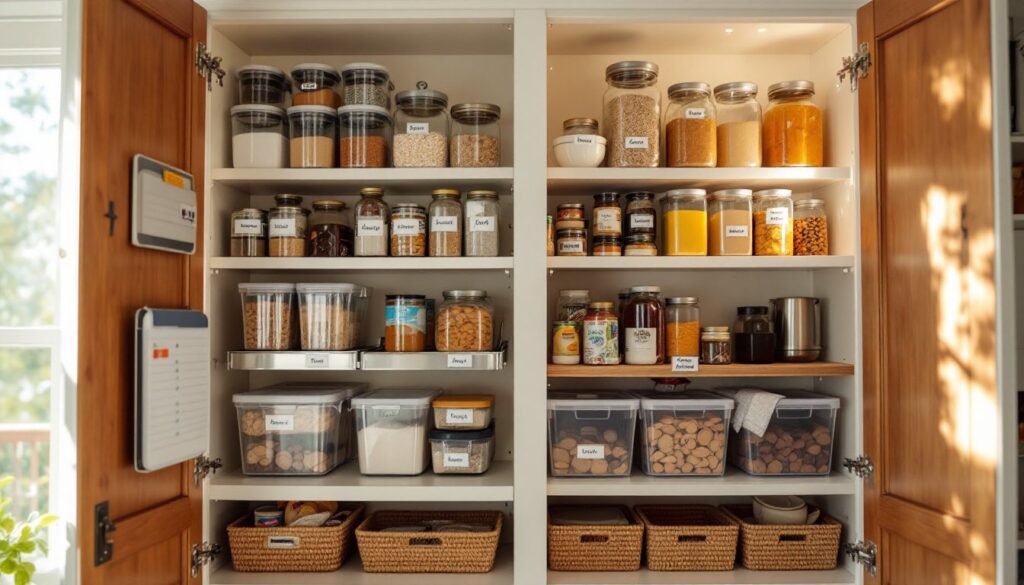
Airtight plastic and glass canisters work for dry goods like flour, sugar, cereals, pasta, and baking ingredients. Look for containers with tight-sealing lids, cheap lids warp quickly. Rubbermaid, OXO, and Sistema make reliable mid-range options that don’t crack after a few opens and closes. Dimensions matter: a 6-cup container works for most grains: a 2-quart size fits pasta well. Standard shelf widths (usually 30–36 inches) fit about three medium containers side by side, so measure before ordering bulk sets.
Glass Containers Vs. Plastic: Pros And Cons
Glass containers show contents instantly, don’t stain or retain odors, and last forever. They’re also heavier, breakable if you’re clumsy, and cost 20–40% more per unit. Glass works great for flours, sugars, and items you access frequently because durability pays off over years.
Plastic containers are lightweight, budget-friendly, and less risky in a busy household. The downside: over time, they stain from tomato sauce or turmeric, and plastic lids warp with heat or repeated washing. Polypropylene (PP, often marked #5) is more durable than polystyrene (#6). Avoid clear plastic, it yellows and becomes opaque after 2–3 years of pantry light and heat exposure.
The honest answer: use both. Glass for high-rotation staples (flour, oats, sugar): plastic for bulk items or seasonal baking supplies you access less often. Your budget and how often you reorganize should guide the split.
Zone Your Pantry By Category
Grouping like items together is the foundation of any pantry system that actually works. When everything has a home, restocking is automatic and you stop buying duplicates.
Here’s a practical zoning approach:
Top shelves (eye level and slightly above): This is prime real estate. Reserve it for items you use weekly, breakfast cereals, coffee, tea, peanut butter, frequently used oils, and spices. Avoid storing heavy items at or above shoulder height: you’ll skip reaching for them if it’s awkward.
Middle shelves: Canned goods, broths, sauces, and condiments belong here. Group by type, all soups together, all beans together, all sauces together. This makes inventory quick (you can see quantity at a glance) and shopping efficient (you know exactly what you need).
Lower shelves: Bulky, heavier items like flour, sugar, rice, grains, and specialty flours. These are items you don’t grab daily, but weight matters less on lower shelves. Arrange by cooking frequency or season, baking supplies together, rice and beans together.
Door shelves: Small bottles, spice jars, packets, and less-used condiments. Keep weight light to avoid straining hinges. Check expiration dates on door-stored items monthly since temperature fluctuations (door opens constantly) age things faster than interior shelves.
Baskets or bins work for snack packs, granola bars, chip bags, and items that crowd shelves. Label the basket itself so you know what’s inside without opening it. Baskets also make it easy for other household members to quickly restock or find what they’re looking for.
Label Everything For Easy Navigation
Labeling sounds obvious until you realize most families skip it, and then wonder why the pantry dissolves into chaos within a month. Labels aren’t decoration: they’re instructions that make maintenance automatic.
Permanent labels (engraved or printed label makers) work best for containers and shelves where contents won’t change. A Brother or Epson label maker costs $25–50 and pays for itself in clarity and reduced waste. Handwritten labels (especially on masking tape) fade and peel: skip them for anything permanent.
Label at least three things:
- Container contents (“All-Purpose Flour” not just “Flour”, your household may buy multiple types).
- Date opened (not purchase date). For dry goods in sealed containers, this matters less, but for oils, flours, and baking ingredients, knowing when you opened something prevents using rancid items.
- Shelf or zone labels (“Breakfast,” “Baking,” “Snacks”). This tells family members where things belong when restocking or cleaning.
For families with kids, picture labels (printable icons) help younger children know where things go, reducing the “where does this go?” questions. Lazada and Pinterest have free printable pantry label sets if you need them.
Maximize Vertical Space And Shelf Depth
Most pantries waste 30–40% of their storage potential because items are shoved in without thinking about depth or height. A few low-cost additions unlock serious space.
Shelf risers or stacking shelves double storage on existing shelves. Place a riser (a hollow frame that lifts shelves 6–12 inches) on a middle shelf, and suddenly you fit two layers of items in one space. These cost $15–30 and fit standard cabinet widths. Just ensure your containers don’t block the door from closing, measure first.
Tiered risers or step shelves let you see items in the back without moving front items. A three-step riser ($20–40) works great for canned goods or jars. You see every item, grab what you need, and restocking is obvious.
Magnetic spice strips on cabinet doors or vertical strips save shelf space for larger items. Small jars and containers stick to metal strips, freeing up shelf depth for bulk goods. This is especially useful if your pantry is narrow or shallow.
Pull-out drawers or sliding baskets fit inside cabinets and let you access deep items without reaching or crouching. Measure your cabinet interior (standard base cabinets are about 20–24 inches deep, uppers about 12 inches). A sliding basket that’s 2–3 inches shorter than cabinet depth slides smoothly. Hafele and Rev-A-Shelf make quality drawer kits: basic versions start around $25–50.
Take a hard look at wasted corners and odd-shaped spaces. A lazy Susan in a corner cabinet (even a plastic one from a dollar store, $2–5) makes items at the back suddenly accessible without a major reach. A skinny shelf divider ($5–10) transforms one deep shelf into usable sections so items don’t migrate to a lost-in-back zone.
Maintain Your System Long-Term
Organization systems fail because maintenance isn’t built in. Here’s how to keep yours running.
Do a monthly check, not a quarterly overhaul. Spend 10 minutes looking at what’s expiring, what’s overstocked, and what got shoved back. This beats the dreaded “deep clean” every 6 months where you find three expired spice jars and forgotten baking chocolate. Organizations experts at Real Simple recommend this cadence consistently.
First-in, first-out (FIFO) applies to pantries just like restaurants. When restocking, move older items forward and place new purchases in the back. This simple habit cuts waste dramatically.
Restock immediately after grocery shopping. Don’t leave bags on the counter “for later”, that’s when things migrate and your zones blur. Spend 10 minutes putting items in their zones right away. Food bloggers at The Kitchn note this one habit transforms long-term pantry success.
Review seasonal needs twice a year. Heavy baking supplies might get premium shelf space in fall and winter but can shift to lower shelves in summer. Seasonal items (holiday baking ingredients, grilling sauces) deserve their own bin that you can easily rotate in and out.
Accountability matters. If you live with others, a quick tour when the pantry is fresh keeps everyone on the same page. They’ll know where items belong and why, it’s not nagging, it’s training. Practical experts like Martha Stewart emphasize that pantry systems succeed when everyone in the household understands the logic.
If you notice a zone failing (snacks ending up in three places, or cans lying sideways), adjust immediately. Don’t wait. A system that needs constant fighting isn’t a system, it’s a chore, and those don’t stick around.