Table of Contents
ToggleShelving isn’t just functional storage, it’s real estate for creativity and personality. Whether you’re styling open kitchen shelves, a living room bookcase, or floating shelves above a desk, the way you arrange items can transform an entire room. Many homeowners struggle with shelf styling because they treat shelves as catch-all repositories instead of intentional displays. The good news? With a few simple design principles, you can create visually striking shelves that feel both curated and livable. This guide walks you through practical, designer-approved shelf styling ideas that work whether you’re starting from scratch or refreshing what you’ve already got.
Key Takeaways
- The rule of three—grouping objects in odd numbers—creates visual balance and rhythm on shelves without appearing cluttered or sparse.
- Mixing heights and depths by layering items at different distances creates a sophisticated, gallery-like display even on narrow shelves.
- Color coordination and negative space transform shelf styling by creating intentional conversations between colors rather than mismatched collections.
- Blend functional items like books, plants, and storage boxes with decorative accessories to achieve shelves that are both beautiful and practical.
- Room context matters: living room shelves can be bold and eclectic, while bedroom and kitchen shelves require more restraint and functional balance.
- Great shelf styling ideas rely on understanding design principles rather than rigid rules, allowing you to create displays that match your lifestyle and aesthetic.
The Rule of Three: Creating Balance With Odd Numbers
The rule of three is a design fundamental that works because the human eye finds odd-numbered groupings more visually interesting than even ones. Three items create balance without feeling symmetrical or boring, think of it as the sweet spot between too sparse and too cluttered.
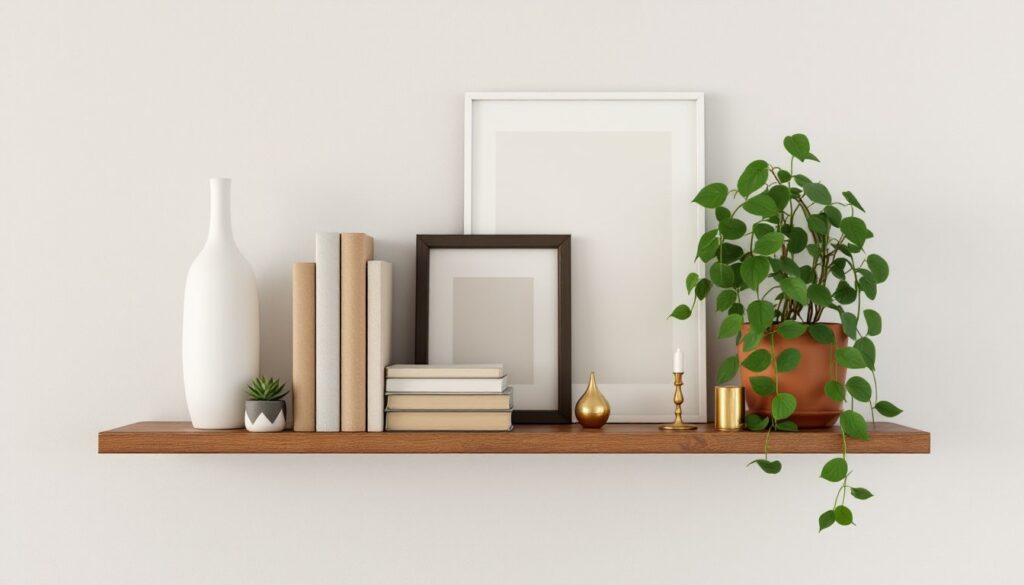
When you group objects in threes, you instantly build rhythm on your shelf. A tall ceramic vase, a stack of three books with coordinated spines, and a potted plant create a focal point that draws the eye. You’re not limited to literal groups of three: instead, think of your entire shelf as composed of multiple three-item vignettes, each telling a small story.
The key is varying the heights and shapes within each grouping. If all three items are the same size, they flatten the visual interest. Stack books to add height, pair a low decorative object with a taller one, and let negative space breathe between groups. This prevents your shelf from looking crowded even when it’s fairly full.
Mixing Heights and Depths for Dynamic Display
A shelf that’s all uniform heights looks flat and static. Mixing heights creates dimension and keeps the viewer’s eye moving across the display. Alternate between tall pieces (books stood vertically, framed art, or sculptures), medium-height items, and lower accent pieces.
Depth is equally important, don’t line everything flush against the back of the shelf. Stagger items forward and backward to create layers. Place a thick book flat, rest a smaller object in front of it at a different depth, and tuck a tall item behind. This layering technique gives even narrow shelves a sophisticated, gallery-like feel.
When mixing heights, remember that the tallest items should typically be toward the end or center of the shelf, not scattered randomly. Grounding the display with weight distribution prevents the shelf from feeling chaotic. Books laid horizontally break up vertical stacks, and varying their orientation, spine out, stacked flat, leaning at angles, adds complexity without disorder.
Color Coordination and Contrast Techniques
Color is what transforms a shelf from serviceable to stunning. Rather than treating every object equally, choose a cohesive color palette and let it guide your arrangement. This doesn’t mean everything matches, instead, you’re creating a conversation between colors.
One approach is the monochromatic method: gather objects in varying shades of a single color (whites, creams, and grays, for example). This feels calming and intentional. A second method pairs complementary colors: neutrals with one accent color that repeats across objects. Warm ceramics paired with cool-toned books and touches of muted blue create visual tension that’s appealing.
Don’t overlook negative space as a “color.” White or empty space on a shelf is just as important as filled space. It prevents visual fatigue and makes individual objects feel more valuable. If you lean toward minimalist display, spacing items farther apart with more breathing room between groupings follows Modern Farmhouse Decorating Ideas principles that balance abundance with restraint.
Incorporating Functional and Decorative Items
The best shelves blur the line between display and utility. A shelf that holds only decorative objects feels precious and impractical: one crowded with purely functional items looks cluttered. The secret is weaving function and beauty together intentionally.
Books are your foundation because they’re both beautiful and useful. Arrange them spine-out for a library effect, or lay some flat and stack others vertically. A small wooden box holds items you use (pens, notepads) while adding texture. A candle or small plant serves dual purposes, it looks good and you actually use or care for it.
Blending Books, Plants, and Accessories
Plants bring life and color to shelves. A trailing pothos in a ceramic pot adds greenery and movement: a small succulent in a geometric planter contributes sculptural interest. Plant care on shelves requires attention to light and watering, so choose plants suited to your shelf’s location. Hardier plants like pothos, snake plants, and ZZ plants tolerate lower light better than fussy varieties.
Accessories fill the gaps and create personality. Framed photos in varying sizes, small sculptures, candles, and vintage finds tell your story. The rule of three applies here too: group three accessories of different scales and textures together. A ceramic piece, a small brass figurine, and a framed print create more interest than five similar-sized objects lined up in a row. When styling surfaces like shelves, you’re applying the same principles used in Kitchen Counter Decorating Ideas, mixing function with visual appeal.
Styling Shelves by Room Type
Shelf styling changes based on context. What works in a living room feels out of place in a bedroom, and kitchen shelves have entirely different demands than a home office. Room type dictates what items belong and how formal or casual the arrangement should feel.
Design resources like Homedit often showcase room-specific shelf styling because context matters. A living room bookcase can be bold and eclectic: a bedroom shelf should feel more restful and personal. Kitchen shelves balance everyday dishes with beauty, while a bathroom shelf prioritizes organization with subtle style.
Living Room and Display Shelf Ideas
Living room shelves are your chance to be bold. These spaces welcome color, collections, and personality. A mix of books, framed art, plants, and meaningful objects works beautifully. Layer in decorator-approved items like sculptural books, art books displayed face-out, small artwork propped against the back, and plants for life and color.
Consider the sightline from your seating area. Position eye-catching pieces at eye level when you’re sitting, not just standing. A tall plant might work in the corner but would block a view at eye level. Balance weight visually, don’t cluster all heavy, dark objects on one side. If you’re displaying collections (vintage cameras, pottery, figurines), group them by type rather than scattering them.
Design platforms like Decoist emphasize that living room shelves often reflect your design philosophy. Whether your style is Bedroom Decorating Ideas on a Budget minimalist, eclectic, or maximalist, the principles remain the same: intentional arrangement, color coordination, and varying heights. Living room shelves are usually the first thing guests notice, so treat them as a curated gallery of your taste and interests. Mix high-quality pieces with treasured finds, and don’t be afraid to let personality shine through.
Final Thoughts: Styling With Intention
Great shelf styling isn’t about following rigid rules, it’s about understanding design principles and applying them with intention. Start with the rule of three, vary your heights and depths, coordinate colors purposefully, and blend functional items with decorative ones. Most importantly, arrange shelves based on the room’s purpose and your daily life. The most beautiful shelf is one you actually enjoy living with, not one that demands constant rearrangement to look ‘perfect.’ Step back, adjust, and trust your eye.