Table of Contents
ToggleSharing a small bedroom as a couple presents a real puzzle: how do you balance personal space, comfort, and intimacy without feeling cramped? It’s not about squeezing more stuff in, it’s about making every square foot work smarter. The good news is that thoughtful design, strategic furniture placement, and clever storage solutions can transform even a tight bedroom into a functional sanctuary. Whether you’re working with 100 square feet or 150, the key lies in choosing multipurpose pieces, using vertical space wisely, and designing zones that respect both togetherness and autonomy. This guide walks through ten practical hacks that’ll help couples reclaim their small bedroom.
Key Takeaways
- Small bedroom ideas for couples succeed when layout prioritizes flow: position beds perpendicular to walls, maintain 18–24 inches of walking clearance, and leave breathing room around furniture to prevent cramped feelings.
- Multifunctional furniture—storage beds, wall-mounted shelves, lift-top benches, and folding desks—eliminates the need for separate pieces, making every item earn its place in tight spaces.
- Vertical storage, large mirrors opposite windows, and floating shelves draw the eye upward and create visual depth, making a small bedroom feel significantly larger without renovations.
- Creating defined zones with a sheer curtain divider, reading nooks, or personal storage areas gives each partner privacy and autonomy while maintaining intimacy in confined quarters.
- Soft neutral colors, dimmers, and layered lighting with wall sconces and ambient fixtures transform small bedrooms from cramped to cozy without consuming floor space.
- Starting with one strategic change—repositioning the bed or adding floating shelves—builds momentum and allows couples to incrementally improve their small bedroom without overwhelm.
Optimize Your Layout With Smart Furniture Placement
Before buying anything new, map out what you’ve got. Start by measuring the room and drawing a rough floor plan, use a tape measure, not guesswork. Sketch in your bed, windows, doors, and closet, noting which direction the door swings and where light enters. Most couples jam the bed against one wall and call it a day, but this often makes the room feel off-balance and wastes floor space.
Consider positioning the bed perpendicular to the longest wall, or even floating it in the center if the layout allows. This opens sightlines and makes the room feel less like a furniture pile-up. Keep nightstands slim, a small console table or wall-mounted shelf works better than bulky dressers on either side. Position the dresser, desk, or seating along the opposite wall from the bed so traffic flows naturally and neither partner feels hemmed in when the other gets up at 2 a.m.
Leave at least 18 to 24 inches of walking clearance on each side of the bed and maintain a path to the closet and exit. If you’re tempted to push furniture flush against walls, resist it, a few inches of breathing room actually makes a small space feel less cluttered, not more.
Choose Multifunctional Furniture to Serve Double Duty
Every piece in a small bedroom must earn its place. Forget standalone nightstands and opt for narrow shelves, floating cubbies, or even rolling carts that slide out when needed. A storage ottoman at the foot of the bed holds blankets or off-season clothes while doubling as a seat for getting dressed or a soft place to set a lap tray for breakfast in bed.
Look for bedroom decorating ideas on a budget that incorporate hidden storage. A desk that folds into the wall or a small work table that tucks under a window saves precious floor space during hours when it’s not in use. Benches with lift-top storage let you pile throw pillows on top but stash extra bedding underneath.
Sites like IKEA Hackers showcase creative modifications to ready-made furniture, letting couples customize pieces to fit tight layouts without custom-build costs or waiting weeks for delivery.
Storage Beds and Headboards With Built-In Features
A storage bed is arguably the single best investment for a small couples’ bedroom. These frames have drawers built into the base, offering substantial room for out-of-season clothing, shoes, or holiday decorations without consuming extra floor space. Quality varies widely, look for models with smooth-gliding ball-bearing drawers and a frame that won’t wobble under nightly use.
Headboards with shelving or cubbies let couples store books, phones, or a lamp in easy reach without eating into nightstand real estate. Some headboards include reading lights or outlets, which saves on table lamps. If a storage bed isn’t in the budget, a raised frame on legs (rather than a solid platform) creates underbed clearance, use it for shallow rolling bins or flat storage boxes labeled clearly so you know what’s where without rummaging.
Use Vertical Space and Mirrors to Create Illusions of Size
The moment couples stop thinking horizontally and look up, their options multiply. Install floating shelves above the desk, dresser, or beside the bed to hold books, plants, photo frames, or decorative boxes. These take zero floor space and draw the eye upward, making the room feel taller and airier. Wall-mounted storage cubes or pegboards hold frequently used items while keeping surfaces clear.
Large mirrors are a small bedroom’s secret weapon. A mirror opposite a window bounces natural light around the room and creates a visual depth that makes the space feel twice as big. Don’t go tiny, a full-length mirror leaning against the wall or hung above a narrow dresser does more work than a small decorative one tucked into a corner. Position mirrors to reflect light, not clutter, and avoid placing them directly above the bed, which many couples find unsettling.
Wall-mounted hooks, ledges, and shelving can be arranged in columns or asymmetrical patterns to break up blank wall space while staying functional. Paint an accent wall or add peel-and-stick wallpaper behind a floating shelf arrangement to anchor the design visually without consuming inches of room.
Create Zones for Privacy and Personal Space
Couples in close quarters need some sense of separation, even within a small footprint. A sheer curtain rod dividing the room doesn’t require a wall, it’s purely symbolic but psychologically effective. When one partner wants quiet time or privacy, the curtain creates a boundary without blocking light or making the room feel fragmented. Alternatively, a tall bookcase or storage unit can serve as a visual room divider that also provides extra storage.
Design one corner as a “his” zone and another as a “hers,” even if they’re just 3 feet apart. One person might have a small reading nook with a chair and a side table, while the other has a vanity corner or workspace. This gives each partner a semi-private retreat and reduces friction over shared space. A small bistro table in the corner lets one person work or read while the other relaxes on the bed without feeling cramped or underfoot.
Personal storage, a small dresser, armoire, or wall-mounted cabinets, also helps. When each partner has defined storage, shared drawers don’t become a battleground. Label shelves or use decorative baskets so finding things doesn’t trigger a search-and-rescue mission.
Select a Calming Color Palette and Lighting Strategy
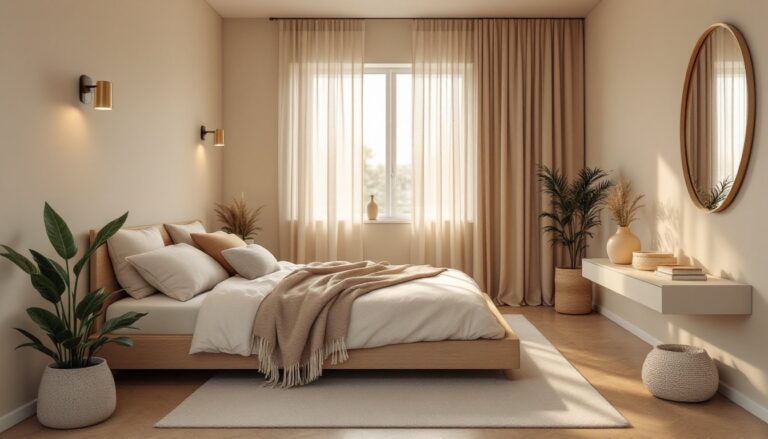
Small rooms feel smaller when painted in dark colors or busy patterns. Stick to soft, neutral base colors, whites, creams, soft grays, or pale blues, that reflect light and make walls recede visually. Accent colors work, but use them on a single wall or in textiles (pillows, a throw blanket, or curtains) rather than all four walls.
Layered lighting is non-negotiable in a small bedroom. Couples often rely on a single ceiling fixture, which casts harsh shadows and forces you to sit in bright light or darkness. Install dimmers on overhead lights so you can adjust mood: add wall sconces on either side of the bed for reading without waking your partner: and use a small floor lamp in a corner to add ambient warmth. Avoid large table lamps, they hog precious nightstand real estate. Instead, use plug-in wall lights, clip-on reading lamps, or strings of warm LED fairy lights tucked behind a floating shelf.
Natural light during the day matters too. Keep windows uncovered or use lightweight linen curtains that filter light without blocking it entirely. If privacy is a concern, consider cellular shades that offer privacy while still allowing light through. Sites like Young House Love document how paint color and layered lighting transform small spaces from cramped to cozy without requiring structural changes.
Conclusion
A small bedroom doesn’t have to feel small. By prioritizing layout, choosing multipurpose furniture, maximizing vertical space, and creating visual zones, couples can design a room that feels intentional and spacious. The trick is resisting the urge to fill every inch and instead letting smart design choices do the heavy lifting. Start with one or two changes, repositioning the bed or adding floating shelves, and build from there. A thoughtful bedroom isn’t about square footage: it’s about how well the space works for both people in it.