Table of Contents
ToggleA cramped kitchen doesn’t have to feel claustrophobic. With thoughtful small kitchen organization, even a galley layout or corner cooking space can work harder and feel more functional. The trick isn’t tearing down walls or overhauling cabinets, it’s about strategy. Smart storage, vertical thinking, and deliberate decluttering transform how you move through the space. This guide walks through seven practical approaches that homeowners and renters alike can carry out, many without tools or permanent changes.
Key Takeaways
- Small kitchen organization transforms cramped spaces into functional areas through strategic storage, vertical solutions, and thoughtful decluttering rather than expensive renovations.
- Measuring your kitchen layout and mapping zones (prep, cooking, cleanup, and dry storage) reveals dead space and hidden storage opportunities that improve workflow and accessibility.
- Vertical storage solutions like wall-mounted shelves, pegboards, and magnetic strips maximize square footage without consuming counter or floor space in compact kitchens.
- Smart cabinet organization using dividers, tiered organizers, and pull-out systems makes items easy to find and prevents the chaos of jumbled cookware and cluttered drawers.
- Honest decluttering by removing duplicate items, single-use gadgets, and expired supplies is the foundation of any successful small kitchen organization system.
- Multi-functional kitchen tools and compact appliances reduce clutter by allowing one item to serve multiple purposes, eliminating the need for space-wasting single-use gadgets.
Assess Your Kitchen Layout and Storage Needs
Before buying a single bin or mounting a shelf, take time to understand what you’re actually working with. Measure your kitchen from wall to wall and note ceiling height, window placement, and where utilities run. Open every cabinet and drawer, pull out what’s inside, and ask yourself: Do I use this? Does it live where I reach for it most? A misplaced pasta pot that nobody uses takes up valuable real estate.
Sketch a simple overhead view of your kitchen layout. Mark zones: prep area, cooking area, cleanup station, and dry storage. This visual helps identify dead space, above the refrigerator, inside cabinet doors, the gap between the stove and wall. Once you see the full picture, you’ll notice opportunities that weren’t obvious before.
Consider traffic flow too. If you’re constantly reaching across a corner or squeezing past an open cabinet door, that’s friction worth eliminating. The best organization system fits how you actually cook, not how a magazine says you should.
Vertical Storage Solutions for Compact Kitchens
In a small kitchen, your walls are prime real estate. Looking up, not just side to side, opens up storage that doesn’t eat floor space. Vertical solutions are game-changers when square footage is tight.
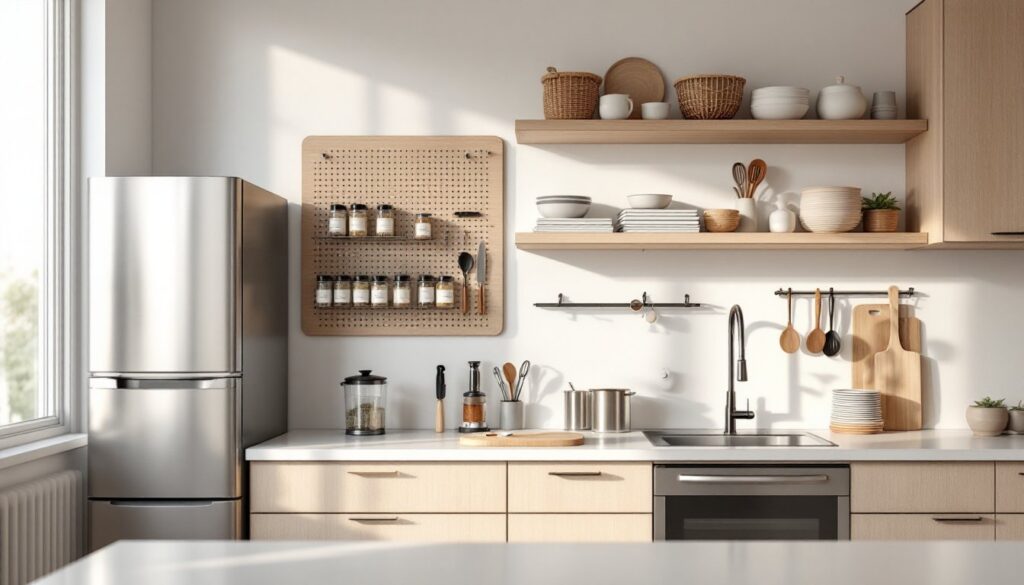
Wall space above counters, beside cabinets, and even above doorways can hold organized gear. Pegboards with hooks work well for frequently grabbed items like tongs, spatulas, or small pans. Magnetic strips mounted on a backsplash hold knives safely and free up a drawer. Hanging baskets or wire shelves tuck into corners. The key is hanging things at eye level or just below, so they’re visible and accessible without creating a cluttered look.
When done right, vertical storage becomes part of the kitchen’s style rather than looking makeshift. That said, over-stuffing a wall looks chaotic. Aim for negative space, every item should have a clear purpose and a home.
Wall-Mounted Shelving and Racks
Open shelving is popular in small kitchens because it visually opens the space (no bulky cabinets) and gives quick access to everyday dishes and cookbooks. Install floating shelves at 10–12 inches deep: they look sleek and don’t jut out far enough to bump your head or block light.
Measure and mark studs carefully before drilling. Use heavy-duty brackets rated for at least 25 pounds per shelf, especially if storing cast iron or stoneware. Shelves should sit level, a torpedo level ($15–30) catches mistakes before you load them.
Alternatively, rail-and-bracket systems (like those from IKEA, Etsy, or hardware stores) mount to any wall and let you adjust heights as needs change. Pair shelves with small baskets for grouping like items: baking supplies on one shelf, cooking oils and vinegars on another.
Above the sink, a tiered dish rack that mounts to the wall handles daily dishes without consuming counter space. Magnetic spice racks stick to stainless steel appliances or painted metal backsplash, freeing cabinet real estate. Kitchen counter decorating ideas balance form and function when shelves are styled with intention.
Smart Cabinet and Drawer Organization
Cabinets and drawers are your foundation. An organized cabinet means you can find what you need without unloading everything in front of it. The right dividers, bins, and systems make that possible.
Start with a sweep: empty one cabinet at a time, wipe it clean, and only put back what you use at least monthly. Duplicate items (three spatulas, five measuring spoon sets) are common, keep your favorites, donate the rest. Store seasonal items (a fancy serving platter used once a year) in a labeled bin in a less-prime cabinet. Inexpensive home organization ideas show that budget solutions work as well as premium ones.
Dividers, Bins, and Pull-Out Systems
Dividers transform cabinets from a jumble into organized zones. Shelf dividers (wood, plastic, or metal) keep stacks of plates or baking sheets upright and separated. They cost $5–20 and prevent the topple-and-crash scenario when grabbing the bottom item.
For pots and pans, use a vertical pot rack or a tiered shelf organizer inside the cabinet. Lids are a perennial chaos source, store them in a lid organizer (a vertical holder with slots, around $10–15) or a magazine-style rack if they’re flat. Stack nested pots rather than stacking lids on top: you’ll find what you need faster.
Drawers benefit from dividers tailored to your tools. A utensil divider ($8–20) keeps forks, knives, and spoons sorted. For junk drawers (and every kitchen has one), use small plastic bins or repurposed containers to corral rubber bands, takeout menus, and batteries so nothing gets lost in a black hole.
Pull-out drawers or baskets mount inside cabinets under the sink, where reach is awkward. A pull-out exposes everything with one motion rather than you crouching and fishing. These range from $20 for a basic wire pull-out to $100+ for custom systems: even a budget version pays for itself in time saved.
For under-sink storage, stacking bins keep cleaning supplies, trash bags, and sponges organized vertically. A tension rod can hold spray bottles by their triggers, freeing shelf space. Remember that pipes occupy the center: measure around them before buying bins.
Declutter and Remove Unnecessary Items
You can’t organize clutter, you can only hide it. A kitchen flooded with gadgets, expired spices, and chipped mugs will feel cramped no matter how many bins you buy. Honest decluttering is the unglamorous backbone of small kitchen organization.
Set aside time to sort everything by category: dinnerware, glassware, cookware, utensils, small appliances, pantry items, and miscellaneous. Be brutal. Does that bread maker work? Have you used it in the past year? If not, it’s taking up space. Keep one good knife instead of a block of dull ones. One favorite mixing bowl instead of ten. One cutting board instead of six.
Expired spices, stale baking supplies, and mystery containers from the back of the fridge have no place. Donate unused cookbooks, duplicate utensils, and appliances you don’t love. A single-use gadget (like a corn stripper or egg separator) isn’t worth a cabinet shelf in a small kitchen unless you cook that way regularly.
After decluttering, the remaining items actually fit comfortably. Everything has a home, visibility increases, and you stop bumping into things. Minimalist home organization isn’t about having bare shelves, it’s about keeping only what you use and value.
Multi-Functional Kitchen Tools and Compact Appliances
In a small kitchen, every item should earn its space. A single-function gadget is a luxury you can’t afford.
Invest in multi-tools: a knife that handles both slicing and chopping, a cutting board that hangs on the wall when not in use, measuring spoons that double as tiny mixing bowls. A chef’s knife and paring knife (two quality blades) replace a drawer full of specialty knives. One solid cutting board (wood or plastic, around $15–30) beats a collection.
For appliances, compact or nesting options keep counters clear. A flat toaster takes less space than a traditional pop-up. A stick blender (immersion blender) stirs, purees, and whisks without occupying cabinet real estate like a full-size food processor. An instant-read thermometer replaces meat thermometers, candy thermometers, and oven probes.
If you love coffee, a single-serve brewer (like Keurig or similar) uses less counter and cabinet space than a full drip machine. A small microwave oven combo (microwave on top, compact oven below, around $100–200) handles reheating and baking without needing separate footprints.
The challenge is resisting the magnetic pull of new gadgets. Before buying anything, ask: Will this replace something I own, or add to clutter? Does it serve a function I use weekly? If the answer is no, walk away. Resources like Martha Stewart’s organization guides balance style with practicality, and The Kitchn offers real-world solutions tested in tight spaces.