Table of Contents
ToggleA sunken hot tub deck isn’t just about dropping a tub into the ground, it’s about creating an intentional, purpose-built retreat that feels like part of your home’s landscape. Whether you’re drawn to clean contemporary lines, spa-resort vibes, or a budget-conscious setup that doesn’t sacrifice style, there’s a sunken design that fits your space and skill level. This guide walks you through the most practical and visually striking sunken hot tub deck ideas gaining traction in 2026, breaking down what each approach requires, the materials that work best, and the real considerations you’ll face during installation.
Key Takeaways
- Sunken hot tub deck ideas require deliberate planning around drainage, permits, and structural support—check local building codes before starting any project.
- Minimalist contemporary designs use composite decking and porcelain pavers to minimize maintenance, while spa-inspired setups layer landscaping, water features, and warm lighting to create an immersive retreat.
- Proper excavation and drainage infrastructure are non-negotiable; a poorly compacted subgrade causes settling and costly repairs within a year.
- Budget-friendly sunken hot tub solutions start with pressure-treated lumber and phased construction, allowing you to build core infrastructure first and add finishing touches over time.
- Electrical work must be handled by a licensed electrician to ensure NEC compliance and GFCI protection on a dedicated 50-amp circuit for safety and warranty protection.
Understanding Sunken Hot Tub Deck Designs
A sunken hot tub sits below the surrounding deck or patio level, typically recessed 12 to 24 inches into the ground. This design achieves two things: it anchors the tub visually into your landscape and creates a natural gathering point where people can sit at deck height, dangle their feet into the water, or slide in easily. Unlike freestanding spas, sunken installations require deliberate planning around drainage, frost protection, electrical work, and structural support.
Before you pick a design style, confirm whether your local jurisdiction requires permits for hot tub installation. Many areas mandate electrical permits (NEC code compliance is standard), and some require building permits for excavation or deck modification. Check with your local building department early, it’s not glamorous, but permits protect your investment and your insurance claim if something goes wrong.
The beauty of sunken designs is that they work in various settings: you can nestle one into an elevated deck, sink it partially into a patio, or even build a sunken tub into a hillside if you have slope. The key is understanding how water, soil, and your local climate will interact with your chosen materials and installation method.
Modern Minimalist Sunken Tub Decks
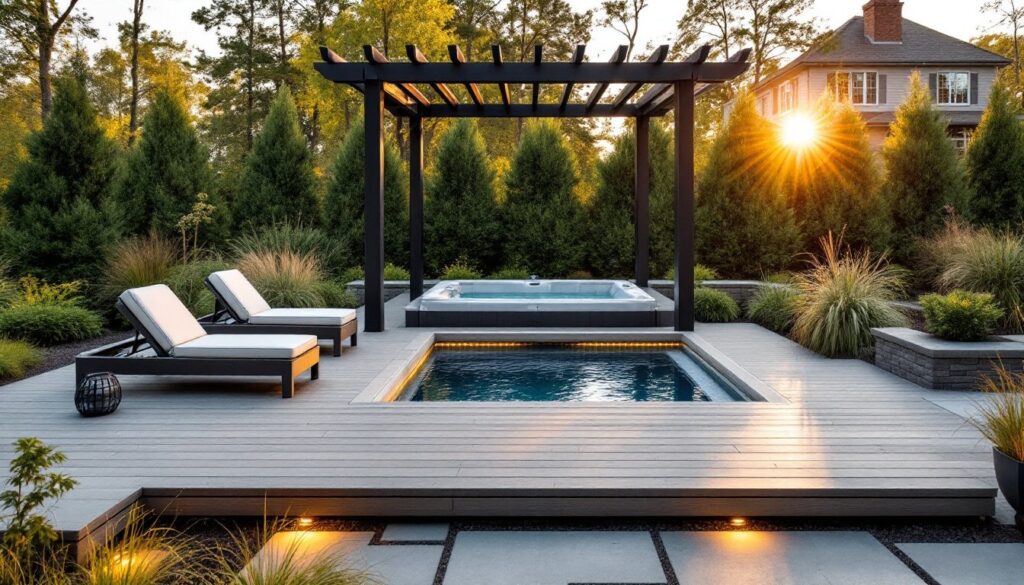
Minimalist sunken tub designs strip away excess ornamentation, focusing instead on geometric form, material honesty, and the tub itself as the centerpiece. Think low-profile decking, neutral color palettes (grays, blacks, natural wood tones), and clean sight lines that let the water and sky dominate the view.
Clean Lines and Contemporary Materials
The most popular contemporary choices are composite decking and pressure-treated lumber. Composite (think Trex or Timbertech) holds up exceptionally well around moisture and requires minimal maintenance, no staining or sealing every two years. Pressure-treated Southern Pine or Hem-Fir is the budget option: it’s durable and codes accept it, but it does need periodic sealing to stay looking sharp.
For the hot tub surround itself, many builders use porcelain pavers or brushed concrete instead of decking. These materials handle constant moisture without warping, won’t splinter underfoot, and feel intentionally “designed” rather than accident-prone. If you go concrete, use an anti-slip finish and pour it with a slight slope (about 1/8 inch per foot) away from the tub to shed water.
A minimalist layout typically measures the decking platform at 8 to 12 feet on each side of a circular or rectangular tub, giving you seating, lounging, and walking space without sprawl. Straight deck boards (not diagonal patterns) reinforce the clean-line aesthetic and install faster, which saves labor cost.
Lighting in minimalist settings is usually recessed or integrated into the deck edge, LED strip lighting under the deck fascia or in-ground spots on the surrounding patio create ambiance without visual clutter. Plug these into a weatherproof outlet controlled by a timer or smart switch.
Luxe Spa-Inspired Sunken Hot Tub Settings
Spa-inspired sunken tubs prioritize relaxation and sensory experience. These designs layer in plants, water features, privacy screens, and layered lighting to create an immersive escape from the rest of your yard.
Lighting, Landscaping, and Relaxation Elements
Start with screening. A partial enclosure, using tall shrubs (bamboo, evergreen screening varieties), a lattice fence, or a combination of both, creates a sense of sanctuary without boxing everything in. Plants also soften the visual transition between deck and landscape, making the sunken tub feel less like a utility and more like a destination.
Water features amplify the spa mood. A small fountain, waterfall, or stream positioned near the tub creates ambient sound that masks neighborhood noise and psychologically deepens the relaxation response. These don’t need to be elaborate: a simple spillway into a shallow basin works beautifully and is less technically demanding than a full recirculating system.
Lighting should be layered: overhead (like pendant lights or a pergola-mounted fixture) for visibility, path lighting to guide guests safely, and accent lighting (uplighting on plants, warm-toned pavers) for mood. Use warm-color LED bulbs (2700K to 3000K) near the tub: they feel more inviting than cool whites and won’t interfere with night sky viewing if that matters to you.
Material choices in spa designs often blend wood and stone. Travertine or natural stone pavers feel tactile and warm underfoot, especially in warmer climates. Cedar or Composite decking in darker tones (charcoal, chocolate) provides contrast and hides staining. Lounge furniture, outdoor chaise lounges rated for wet environments, should be placed within arm’s reach for the post-soak slump.
A gazebo provides excellent structural framing and weather protection for a spa-style tub setup, especially if you live in a rainy climate. It keeps snow and leaves out, defines the space overhead, and gives you a solid mounting point for hanging lights or speakers.
Budget-Friendly Sunken Hot Tub Deck Solutions
You don’t need to spend $30,000 to build a functional, attractive sunken tub surround. Smart material choices and phased construction let you start small and expand later.
Begin with excavation and a proper base. This is non-negotiable, a poorly compacted or draining subgrade causes settling, cracking, and drainage headaches within a year. Rent a small excavator for a day or two (around $300–500 regionally) and dig the tub platform 2 feet deep, then backfill with 4 inches of compacted gravel and add a drainage layer (perforated drain line in a French drain setup). Yes, you can hire an excavator operator, but the DIY route saves labor cost.
For decking, pressure-treated lumber is your money move. It costs about half what composite does, installs with the same fasteners and techniques, and lasts 15–20 years with basic maintenance (a coat of sealant every 2–3 years). Use 2×10 joists on 16-inch centers spanned across concrete piers or posts, don’t skimp on structural support.
Surround the tub with a simple pea gravel patio or stamped concrete (DIY kits exist, though the learning curve is steep). Alternatively, lay down outdoor pavers in a simple grid: you don’t need mortar, and installation is straightforward enough for one person over a weekend.
For furniture and finishing touches, shop for commercial-grade outdoor pieces that are wet-friendly. A few lounge chairs, a small side table, and maybe a cheap pergola frame from a big-box retailer (assembly required) transform the space without breaking the budget. Paint the pergola a neutral tone and train a cheap climbing vine through it for shade, this takes a season to fill in but costs almost nothing.
One more budget hack: start with just the sunken tub and minimal surround, then add plantings, shade structures, and fancy pavers over time as your budget allows. The core infrastructure (tub, drainage, basic decking) is 70% of the work: everything else is finishing.
Essential Materials and Installation Considerations
Materials Checklist
- Hot tub: Size determines excavation scope (common sizes: 5–7 feet diameter for 2–4 people: 7–9 feet for larger groups)
- Decking: Pressure-treated lumber, composite, or porcelain pavers
- Subgrade prep: Gravel, landscape fabric, drainage materials
- Fasteners: Stainless steel bolts and connectors (galvanized corrodes near chlorine/salt water)
- Sealant/stain: For wood, exterior-grade options rated for constant moisture
- Electrical: GFCI outlet, weatherproof conduit, breaker-protected circuit (call a licensed electrician)
Installation Best Practices
Drainage is everything. Water will find every gap: plan for it upfront. Slope the deck away from the tub, install a French drain or perimeter drain line, and consider a sump pit if your water table is high. If water pools under the deck, wood rots and soil subsides, both expensive fixes.
Let materials acclimate. Lumber and composite decking need to sit in your yard for a week before install so they adjust to local humidity. This prevents cupping or shrinking after fastening. Store pavers flat on a pallet under a tarp.
Structural support matters. Use concrete footings for any posts (dig below your frost line, typically 3 feet in northern climates, less in warmer zones). Don’t cut corners on joist hangers or ledger board connections: these hold the weight.
Electrical work demands a professional. The NEC (National Electrical Code) requires hot tubs to be on a dedicated circuit with GFCI protection, typically 50 amps for jets and heating. A licensed electrician ensures compliance and protects your warranty.
For style guidance and material inspiration, Bob Vila’s home improvement resources and This Old House renovation guides offer detailed walkthroughs on deck building, material selection, and weatherproofing, both sites show real projects with material suppliers and cost breakdowns worth reviewing before you finalize your plan.
Safety reminders: Wear safety glasses and gloves during excavation and fastening. Use a GFCI outlet on any power tools near the work site. Mark utility lines before digging, call your local utility locating service (it’s free). If your tub requires stairs or a ramp approach, ensure it meets ADA standards for slope (1:12 ratio) if anyone in your household has mobility concerns.